Breaking the sugar habit can be tough. But replacing sugar with artificial sweeteners carries its own challenges and risks.
By making the change to artificial sweeteners, we’re not really breaking the sugar habit. Instead, we’re using a substitute that tastes like sugar. So we’re still craving the sweet stuff, and now, on top of that, what we’re consuming is artificial. No victory there.
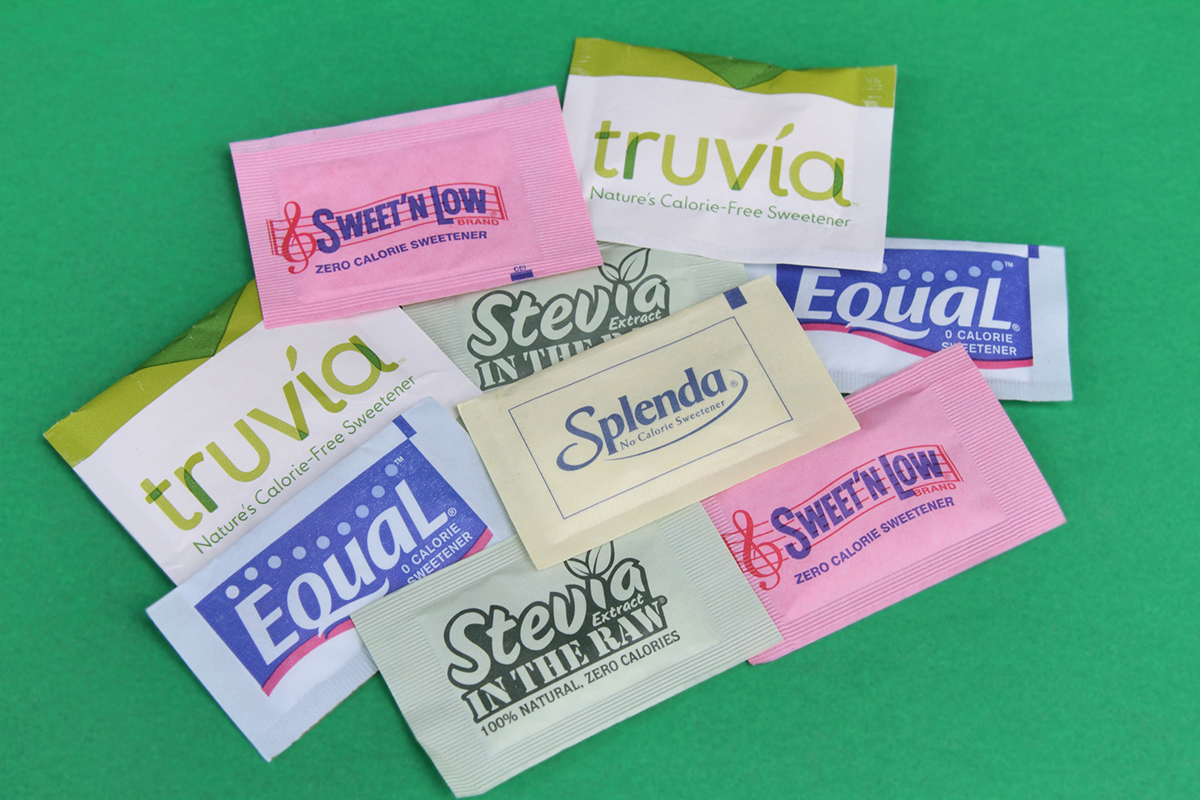
 Scientific studies have shown that aspartame (NutraSweet, Equal) adversely impacts blood sugar and insulin levels in the same way sugar does. Yes, it’s zero calories, but weight gain is not just about calories. These artificial substances keep metabolism in fat storage mode just the same by spiking the hormone insulin. Aspartame is especially notorious for fat gain, and, to add insult to injury, it’s also a neurotoxin—toxic to the brain. Recently, there was also some association found between aspartame use and incidence of lymphoma in men and women. Let me be clear: An association does not mean cause and effect. However, this finding merits further investigation.
I have many weight loss patients who eventually hit a plateau. Upon further assessment of eating habits, I often find regular consumption diet soda or other artificially sweetened beverages (e.g., diet iced teas, Crystal Light). Eliminate the artificially sweetened beverage and, voilà plateau is gone and weight loss continues! I have countless anecdotes of this.
Although sucralose (Splenda) was the star and savior for sugar lovers everywhere during my time at the Atkins Center, recent research reveals it isn’t much better. It, too, can cause surges in blood sugar and insulin in many individuals, keeping them in perpetual fat storage mode.
So what about stevia? Yes it’s natural, but so are sugar, marijuana and heroin. Should we take those, too? It’s likely the most innocuous sweetener, but stevia will still keep you in perpetual sweet-craving mode. This is just more misery that comes with enabling an addiction. I also am not convinced that stevia is without blame in weight loss plateaus and unstable blood sugar.
Sugar alcohols such as erythritol and xylitol, among others, aren’t recognized as carbohydrates in the body. They simply pass through you, literally, if you take enough of it. Most people can’t tolerate more than 20 grams of sugar alcohols, the amount in, say, two low-carb protein bars, without having a laxative effect.
And by the way, agave nectar is the new high fructose corn syrup, in case you didn’t know.
So if you really can’t drink your tea or coffee without using some kind of sweetener, consider this: It’s not the beverage itself that you enjoy, it’s simply a sugar delivery system for you.
To your health!