Creatine is having a moment. Sales of this popular sports supplement are skyrocketing. A supplement trade publication reports:
“The global creatine supplements market size was valued at 1.4 billion dollars in 2025 and is projected to grow from 1.7 billion in 2026 to 8.7 billion by 2033 . . . Increasing awareness of fitness and the benefits of creatine supplementation for improving athletic performance, muscle mass, and strength is driving market growth.”
Fortune, Forbes, the Economist, the New York Times and the Wall Street Journal recently wrote feature articles about creatine.
Is creatine for real, or just another hype train?
Creatine is enjoying widespread embrace by the athletic community. Since it’s a legal performance enhancer, not subject to World Anti-Doping Agency (WADA) bans, many collegiate and professional teams are supporting its use for competitors.
It was once thought that, by bulking up muscles, creatine would make athletes more prone to strains and sprains. Accounts proved anecdotal, and the myth was busted by a scientific review that showed conclusively that “no increase was found for musculotendinous stiffness at any assessment load.”
On the contrary, research has demonstrated creatine’s potential for speeding injury recovery by fending off muscle deterioration during periods of immobility.
Is it safe?
Creatine is one of the best-researched and characterized supplements, with over 1500 scientific studies attesting to its safety. Once thought to “stress” the kidneys, this proved untrue, resulting from confusion over its natural conversion to creatinine, used as a marker to denote renal failure.
In fact, research has revealed that patients with chronic kidney disease suffer from low creatine levels; while caution is advised until safety is unequivocally proven, it may be that creatine administration could offer a hedge against the muscle wasting that accompanies renal failure—an application that’s prompting study.
Side effects are mostly confined to mild temporary gastrointestinal issues that normally only occur in sensitive users with intake over 20 grams per day (5-10 grams daily suffices for maintenance).
Unlike other sports supplements with anabolic effects, creatine does not have a negative impact on hormonal balance, testosterone, estrogen, or growth and puberty development in children and adolescents.
Can you get it naturally?
Creatine is normally synthesized by the body from three dietary amino acids: arginine, glycine and methionine. Individuals generally produce around two grams per day, but age-related declines are particularly steep over the age of 65.
Creatine is naturally found in animal products, but cooking tends to break it down—achieving a target goal of five grams would necessitate eating two pounds of raw meat per day.
Does it really make you stronger?
The evidence is robust for creatine’s benefits for bouts of short-duration, high-intensity exercise. It works by amping up production of ATP, the muscles’ energy currency.
Hence it might prove advantageous to support resistance training and short bouts of exercise, like sprints. And there’s evidence it makes muscles bigger and stronger by potentiating training adaptions.
Some controversy remains over creatine’s role in promoting endurance, since there’s a weight trade off; bigger muscles may increase body mass which may hinder the performance of ultra lean long-distance athletes, where every ounce might mean the margin of victory.
Offsetting that are creatine’s salutary effects on recovery time, by mitigating muscle damage.
And it does bulk up muscles. This was once thought to be due to water retention alone, creating the illusion of bigger muscles. But research confirms creatine produces real gains by curbing anabolic resistance, and fortifying pathways of muscle metabolism.
Loading dose?
Traditionally, athletes were advised to begin taking a loading dose of 20 grams per day (four teaspoons of creatine monohydrate powder) for a week or so to build peak levels, then scale back to maintenance of five grams per day. But it’s been demonstrated that optimal levels can be achieved with a more gradual ramp-up by taking five grams per day consistently.
Best form?
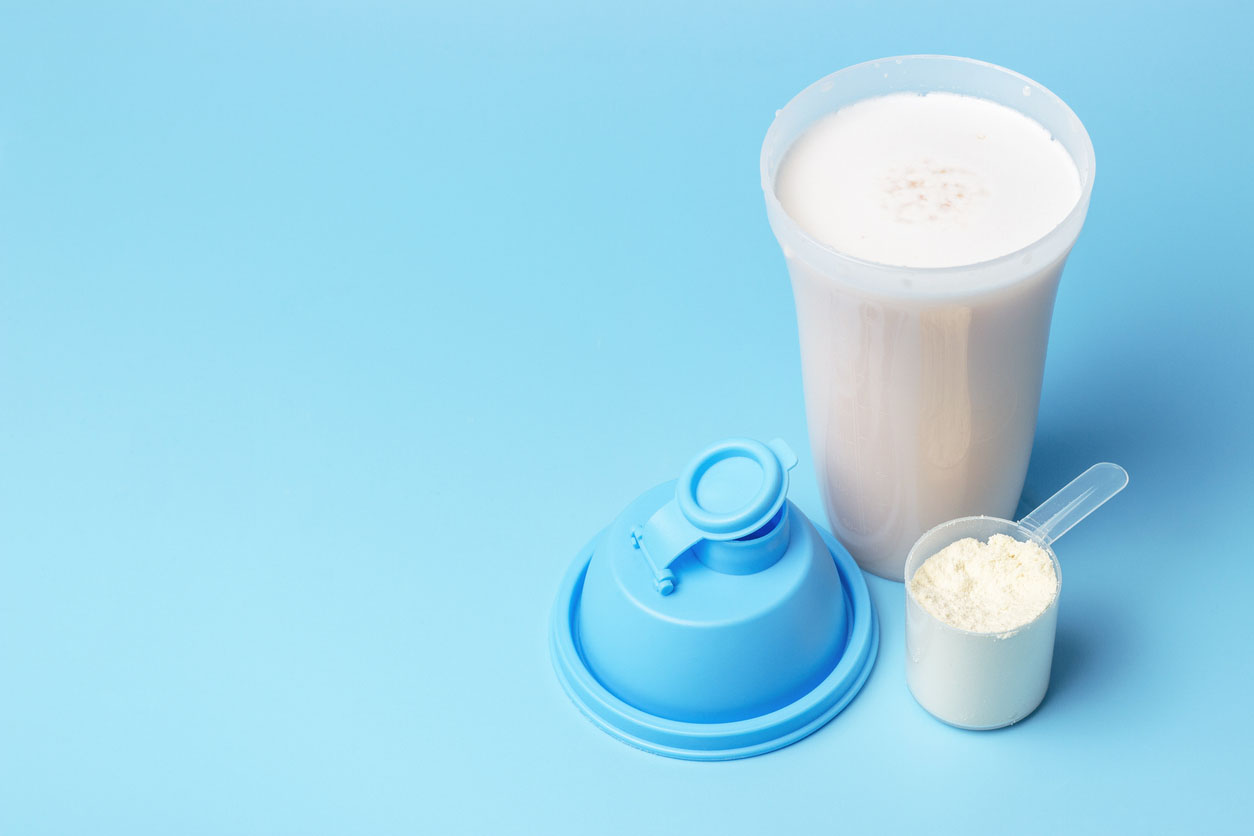
The most widely used creatine supplement is creatine monohydrate powder, a teaspoon or two of which can be added to a protein shake, as I do daily. That provides five to ten grams of creatine. Its taste is rather innocuous so it can also be mixed in yogurt or sprinkled over fruit.
Superior at dissolving in water is creatine hydrochloride, and it’s more concentrated; roughly 1.5 grams is equivalent to five grams of the monohydrate. Because of its bitter taste, it lends itself better to capsules or as a flavored powder that you can throw into your hydration bottle.
Makers of the hydrochloride form claim superior solubility, absorption and bioavailability, but a review has found “there is currently no evidence to support the use of Cr-HCl instead of CrM.” Plus, the hydrochloride form tends to be more expensive.
Lately, a torrent of “creatine gummies” has been unleashed on the marketplace. But it’s hard to cram five grams of creatine into a small gummy, so most are seriously under-powered. An analysis by NOW Foods found that “Overall, there was a 46% failure rate to meet claims.” Some gummies even contained less than five micrograms of creatine—1/1000th of the recommended daily dose.
What if you’re not a jock?
There’s strong evidence for creatine’s benefits for athletes. But creatine may help even previously untrained individuals stave off sarcopenia, the progressive age-related loss of muscle reserve that leads to frailty, falls, fractures and metabolic dysfunction, especially when they team it with strength training. Researchers concluded:
“The current body of research indicates that creatine monohydrate supplementation, primarily when combined with resistance training, is a viable lifestyle intervention to improve aging muscle mass, strength and measures of functionality, which may decrease the risk of falls and fractures in older adults.”
Brain benefits
Since the brain has the highest energy demands of any organ in the body, it stands to reason that a compound that boosts ATP production by mitochondria might help brain function. Indeed, while studies on ALS, Parkinson’s Disease and Alzheimer’s have yielded mixed results, there’s evidence that creatine may enhance mood in depression, and speed recovery from concussions and strokes.
A corollary is that under conditions of sleep deprivation, “creatine can partially reverse metabolic alterations and fatigue-related deteriorations in cognitive function.” For that reason, I take some along for long overnight flights.
Boosting immunity
The cells of the immune system are also subject to energy constraints. Hence research demonstrating that creatine can enhance dendritic cell function has led to speculation that it might be leveraged to enhance responses to cancer immunotherapy for conditions like melanoma.
Is more better?
The consensus is that, for training purposes or for staving off sarcopenia, 5-10 grams of creatine monohydrate might suffice. But because of its difficulty in traversing the blood-brain barrier, the dosage required for neurological conditions might be higher—more like 30 grams per day.
When not to take creatine
Because creatine can elevate blood and urine levels of creatinine, it might create the false impression of compromised kidney function—so-called “pseudo-renal failure.” Therefore, it’s advisable to stop creatine 48 to 72 hours (two to three days) before a routine blood panel.
My experience
I had experimented with creatine on and off for a long time, but now I routinely take five to ten grams of creatine monohydrate in my daily protein shake. It’s hard for me to ascertain its effect amidst the profusion of supplements I take, including mitochondrial enhancers like urolithin A, NTFactor®, and nicotinamide riboside, but I have the distinct impression that I’m able to perform consistently at higher levels with fewer downtimes for recovery than in the past.
And, I’ve gained weight, around five pounds, but my body composition scale reveals that it’s predominantly lean muscle, not fat. Therefore, creatine will remain part of my anti-aging and performance optimization regimen.
I suggest you give it a try.