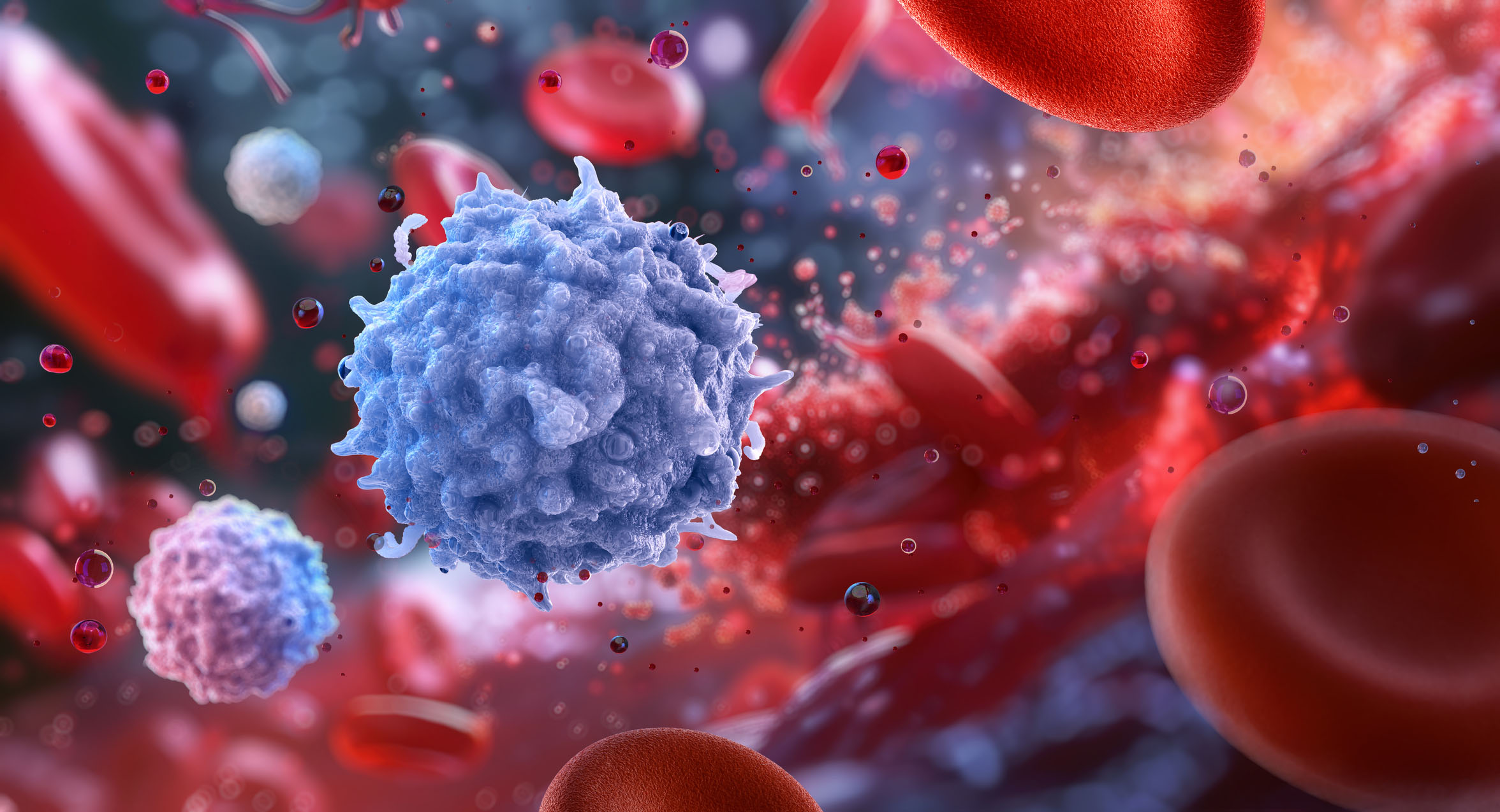
Enjoy this comprehensive discussion about immunity from pre-eminent Functional Medicine doctor Robert Rountree, MD, who contends: “The immune system doesn’t need to be commanded. It needs to be supported, trusted, and given the right information.” There’s a natural solution that he proposes: BWH-85® Beta Glucan.
—Dr. Ronald Hoffman
This article contains content from one of our trusted sponsors.
For most of my career, we taught immunology according to a clear division of labor. The adaptive immune system—the T cells and B cells—was considered the intelligent side. It learned, remembered, and built highly specific responses based on prior encounters. The innate immune system, by contrast, was fast but unsophisticated: monocytes, macrophages, dendritic cells, neutrophils, and natural killer cells that could mount an immediate defense but, supposedly, retained nothing from the experience.
I learned that framework in medical school. I taught it to clinicians for years. It provides the rationale for emphasizing vaccines as the best way to prevent a wide range of viral and bacterial infections. It has been the foundation for development of disease modifying antirheumatic drugs, which primarily target aberrant T and B cells. However, like a lot of things once taught with confidence, the science eventually caught up and changed our thinking.
Over the past decade, researchers led by Mihai Netea at Radboud University have described a phenomenon called trained immunity: the ability of innate immune cells to be functionally reprogrammed by an initial exposure and to respond differently when they encounter a future challenge. Not with the antigen-specific precision of an antibody, but with something more foundational: a heightened state of readiness that extends across threats. The first responders, it turns out, can learn.
One of the key signals researchers have used to study and induce this process is beta-glucan, a structural compound found in the cell walls of yeast and certain mushrooms. Innate immune cells carry receptors that recognize beta-glucan – and that’s no accident. Beta-glucan is an ancient biological signal the immune system evolved alongside. When it’s present, the cells don’t just react to it – they respond to it in a way that leaves them durably changed.
Through epigenetic modifications, defense-related genes can remain more accessible, more easily activated when they’re needed. The cells also reorganize their energy production to support that readiness. The signal doesn’t fight the battle. It changes how the cell prepares for one.
I think about physical training. A hard workout doesn’t make you stronger while you’re doing it — it makes you stronger because of how your body adapts afterward. The stress is the signal; the adaptation is the real change. Someone who has trained for years doesn’t work harder during a race. Their systems coordinate more efficiently, they recover faster, and they’re better prepared for demands they’ve never encountered before. Trained immunity follows the same logic. An appropriate initial signal can leave innate immune cells better organized, better resourced, and more ready for whatever comes next.
This reframes what good immune support actually means. I’ve never been comfortable with the phrase “boost the immune system,” because the immune system is not a dial you turn up. A system stuck in overdrive is its own problem — most of us have seen what that looks like clinically. What we actually want is an immune system that recognizes threats accurately, coordinates a proportionate response, and returns to balance when the work is done. Readiness, not reactivity. Coordination, not force.
That distinction is central to why beta-glucan has become such an important tool in trained immunity research. Specific forms of beta-glucan — particularly the beta-1,3/1,6-glucans found in yeast and certain mushrooms — are recognized by innate immune cells through pattern-recognition receptors, including Dectin-1. That recognition initiates metabolic and epigenetic changes consistent with the trained immunity model.
What I find meaningful is not that beta-glucan does something to the immune system. It’s that the immune system already knows how to read it. Beta-glucan is an ancient biological signal — something the body’s recognition systems evolved alongside. It doesn’t tell the immune system what to do. It reminds it of what it already knows how to do. That’s a different kind of relationship with a supplement than most people are used to thinking about.
It also reflects something I’ve come to believe more deeply over my career: the body possesses a profound biological intelligence, and our role is usually to support that intelligence rather than override it.
A word of caution that I’d want for myself: not all beta-glucans are interchangeable. Beta-glucans from oats and barley are structurally different from the beta-1,3/1,6-glucans linked to immune activity. Even within that category, differences in source, processing, purity, and particle structure influence how the molecule behaves. I look beyond the name on the label and ask what was actually studied, in what form, and whether that research applies to the specific ingredient I’m recommending.
BWH-85® Beta Glucan is a highly purified, yeast-derived beta-1,3/1,6-glucan supported by product-specific research. That level of specificity — knowing exactly what was tested and how it was prepared — is a baseline I hold for anything I put my name behind.
But the larger story isn’t about any one product. It’s about what trained immunity reveals regarding the body itself. You are not fragile, and you are not passive. Your immune system is constantly receiving signals, adapting to them, and becoming better — or less well — prepared for what comes next. Sleep, movement, nourishment, stress, and meaningful biological signals all contribute to that process. BWH-85® is one more signal, delivered in a form the body already knows how to use.
The immune system doesn’t need to be commanded. It needs to be supported, trusted, and given the right information.
After decades of teaching immune function, I find trained immunity genuinely exciting — not because it changes what we’re trying to accomplish, but because it deepens our understanding of how much the body is already capable of doing on its own.
*These statements have not been evaluated by the Food and Drug Administration. This product is not intended to diagnose, treat, cure, or prevent any disease.