Dr. Jeff Bland is deservedly recognized as the godfather of Functional Medicine. He has long been an inspiration to me in my career path. His latest formulation, HTB Rejuvenate by Big Bold Health, harnesses the extraordinary benefits of Himalayan Tartary Buckwheat, combined with synergistic ingredients. I have utmost confidence in the scientific bona fides of this product and recommend it unhesitatingly.
Right now, Big Bold Health is offering exclusive 20% off savings for my audience. Simply use code HOFFMAN20 at checkout.
—Dr. Ronald Hoffman
This article contains content from one of our trusted sponsors.
In the quest for healthy aging, scientific research has increasingly explored nutritional epigenetics—the study of how nutrients can modify gene expression and influence our rate of cellular aging. Our recent pilot clinical study published in Frontiers in Nutrition (November 2024) shines a new light on this. We found that a polyphenol‑rich supplement from Tartary buckwheat influenced multiple epigenetic clocks, acting on longevity, immune and metabolic pathways.
What Are Polyphenols—And Why They Matter
Polyphenols are plant-derived micronutrients abundant in foods like berries, teas, onions—and notably, Tartary buckwheat. These molecules, which include flavonoids like rutin, quercetin, luteolin, and hesperidin, have historically been prized for their antioxidant roles. But we are now learning that they may have powerful microbiome, immune, metabolic and epigenetic effects.
Traditional studies have focused on isolated polyphenols. But real-world intake is more complex—whole plants deliver complex blends of polyphenols along with vitamins, fiber, and minerals, potentially multiplying benefits through synergy.
Tartary Buckwheat: A Nutrient Powerhouse
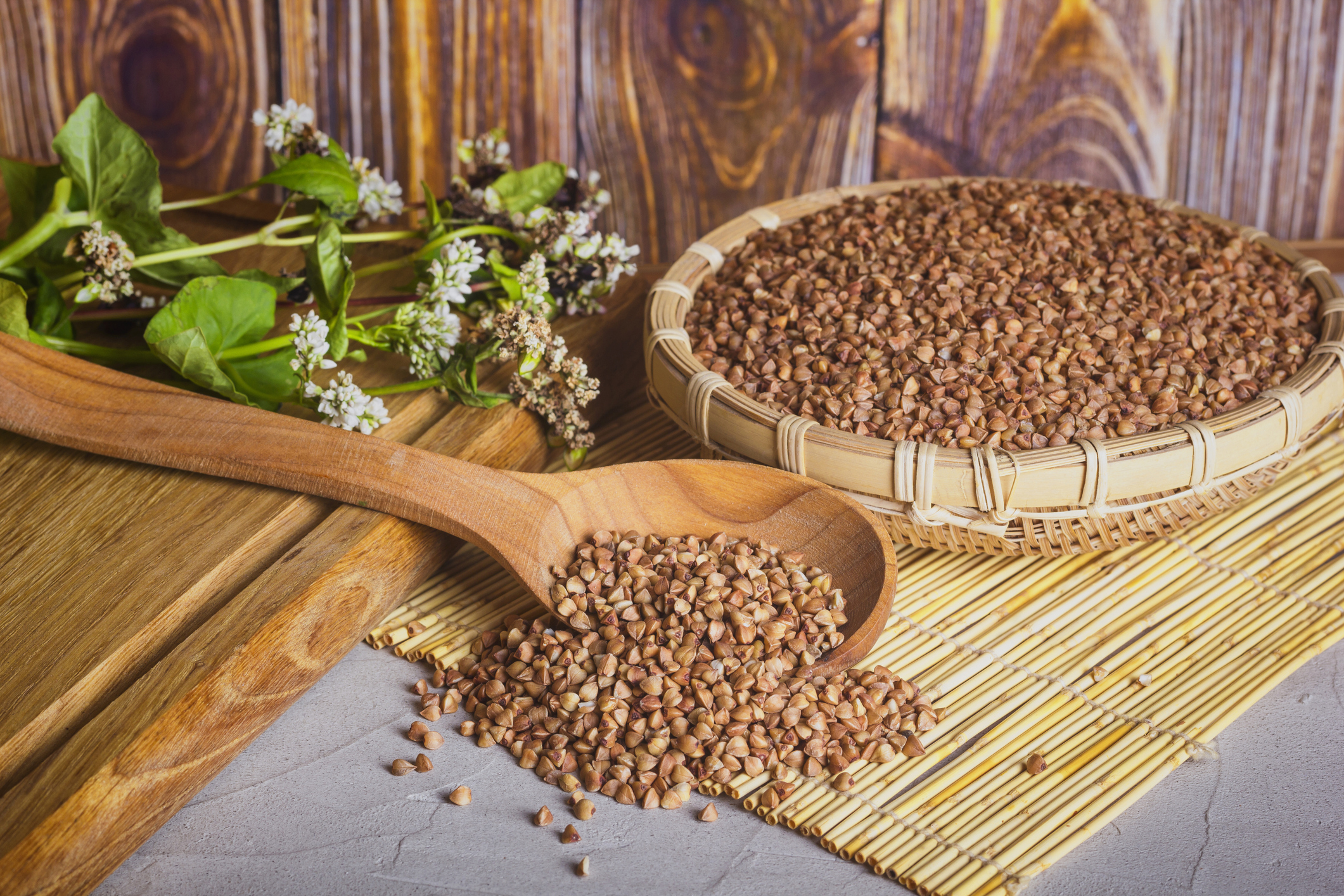
Tartary buckwheat (Fagopyrum tataricum), has long been a nutritional and medicinal staple in Eastern medicine. Modern science has started to reveal what makes this plant so special—it’s absolutely loaded with polyphenols. In fact, it’s the richest known source of the quercetin family flavonoid rutin. Tartary buckwheat’s rich polyphenolic profile—including rutin, quercetin, luteolin, and hesperidin—makes it an ideal candidate for studying polyphenol‑driven health interventions.
The Clinical Study
In our pilot trial, 50 healthy adults (ages 18–85) took a polyphenol concentrate derived from Tartary buckwheat polyphenols (HTB Rejuvenate) daily for 90 days. We analyzed:
- Epigenetic age clocks (GrimAge, PhenoAge, DunedinPace) using DNA methylation markers in immune cells
- Immune cell composition, via deconvolution of cell subtypes
- Gene Ontology (GO) pathway shifts, showing molecular pathway changes
Key findings:
- We observed significant slowing in epigenetic aging among a set of participants with a higher “immune age” of up to 47%.
- We observed altered proportions of naive B cells and other immune markers—signs of shifting immune system phenotypes.
- GO analysis revealed dramatic modulation of longevity and immune-related pathways—particularly ceramide kinase (CERK), which is linked to senescence and immune signaling.
This research is some of the first to suggests polyphenols may act beyond antioxidants—potentially influencing epigenetic regulation via DNA methylation. This is a big step forward for understanding how food can be used in targeted intervention, and why we can’t overfocus on individual nutrients at the expense of the data contained in real food.
Final Thoughts
This study offers compelling early evidence that polyphenols from a whole-food source—Tartary buckwheat—can modulate epigenetic aging and immune systems in humans. It adds to a growing body of research suggesting that plant-based diets, rich in complex phytonutrient blends, might be our best bet in hacking the molecular machinery of aging.