Q: I’ve been using a CGM (Continuous Glucose Monitor) and notice my readings differ from day to day eating the same food or food item (for example, a sweet potato). Some days my blood sugar reading after is higher, other days, lower. Why is that?
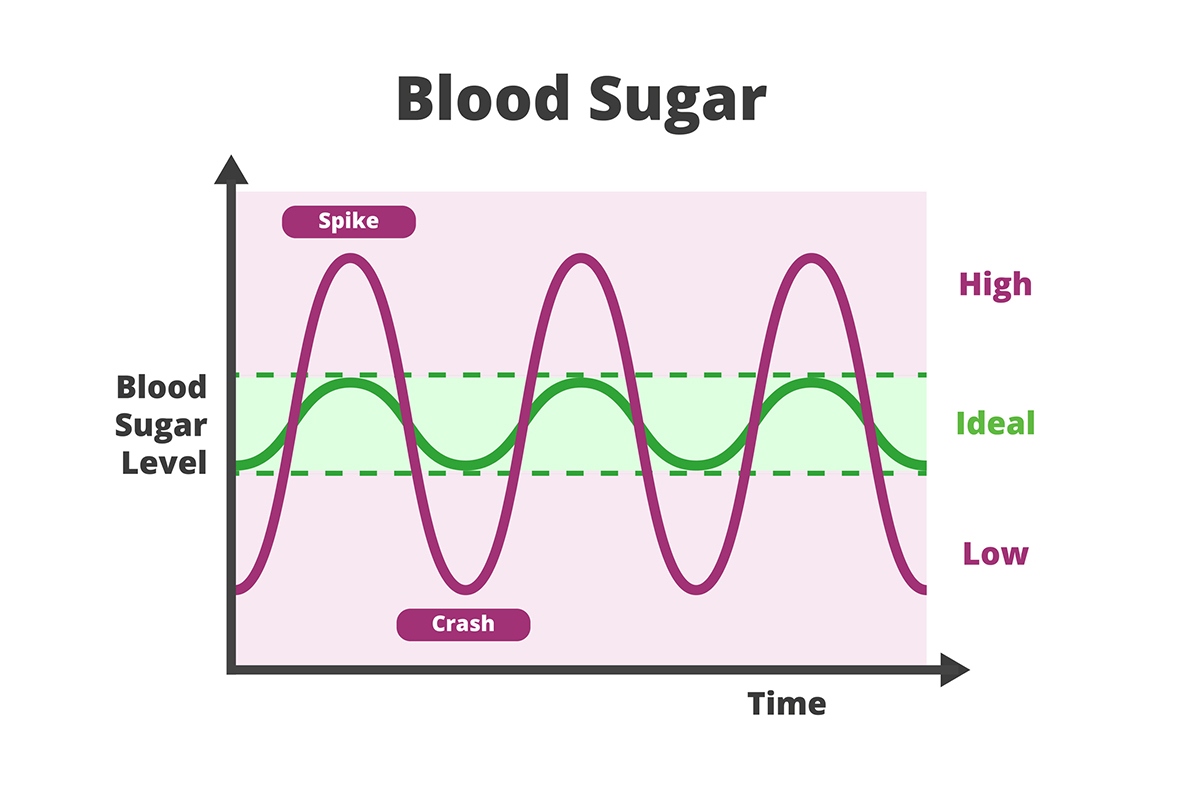
A: Variability in postprandial (after meal) blood sugar response is impacted by more than just that sweet potato. First, what did you have it with? Did you butter it? How big or small was it? Did you have it with some protein like steak or fish or did you eat it alone? Was the protein you ate with it fatty or lean? Did you eat the potato first or the protein first, or did you take alternate bites of everything on your plate?
The glycemic index of any food is deceiving because it’s a standalone number for that food item only. But we rarely eat a potato on its own. Usually, it’s accompanied by other foods that impact its glycemic load. For example, the impact of the sweet potato to postprandial blood sugar is blunted by the protein and fat of the entire meal—for instance, steak with potato and broccoli—thereby lowering its glycemic load which translates to a more blunted blood sugar response.
But there are other impacts. The meal you ate earlier, prior to eating that potato also sets up your response to said potato contained in your current meal. So, the question to ask is how stable was your blood sugar before? For instance, if you ate noodles for lunch, and/or cereal for breakfast, and a steak with potato at dinner, those prior meals, high in carbohydrates, have already destabilized your blood sugar. So then the impact of that potato just adds to the destabilization (read: higher blood sugar response). However, if your lunch consisted of, say, chicken and a salad, this low carb meal is far less likely to destabilize blood sugar (unless you slathered it with a sweet dressing!), setting you up for a healthier response later on with dinner containing a sweet potato. And what did you drink? A cocktail, soft drink, or water? This will definitely drive postprandial blood sugar response.
But there’s more. How well did you sleep the night before? Lack of sleep often promotes unstable blood sugar the following day—like a hangover. High cortisol brought on by stress—including the physiological stress of eating a rich dessert or imbibing in alcohol the night before—are culprits.
Do you have a cold, infection or injury? The body’s response is, indeed, higher blood sugar. Don’t place all the blame on the sweet potato if this is the case. As you can see, there are many variables to consider when analyzing your postprandial blood sugar response. Keeping a very detailed food diary while using a CGM can help you connect the dots.
To your health!
Leyla Muedin, MS, RD, CDN