We take the keys away from grandma . . . why not doctors?
It’s no secret that older drivers have more accidents; they may have diminished reflexes, vision, hearing and judgement. According to a 2024 CDC report, in 2022, 4.0% of adults age 65 and older reported ever having received a dementia diagnosis. For those over 85, that risk rose to 13.1%.
Which begs the question, what about doctors? They can wreak havoc through medical mistakes. In 2020, a study of 141 physicians over 70 found that 13% had cognitive deficits that might impair their clinical judgement.
Even if not suffering from outright brain deficits, how many senior doctors have simply lost their mojo for staying abreast of the latest innovations in medicine?
We place mandatory retirement limits on commercial pilots, air traffic controllers, senior partners in law firms, and law enforcement officers—should doctors be exempt?
There’s a patchwork of regulations for testing and relicensing doctors; many states have them, but some (including my state of New York) do not. Some hospital systems have mandated evaluations for senior physicians, but others have backed off, fearing age discrimination suits.
There’s also the consideration that the ranks of experienced doctors are rapidly depleting, as physicians bail because of the increasing hassles and diminishing financial rewards of medical practice.
More stringent proficiency testing might discourage veteran doctors, whose cumulative experience is irreplaceable, from taking on burdensome recertification. Notable outliers have included Dr. Howard Tucker, a neurologist who practiced medicine from 1947 to 2022, retiring at the age of 102. Over the course of his lengthy career he earned a law degree, treated patients for over 70 years, and taught innumerable medical students and residents until two months before his death at 103.
Could your aging doctor be a “road hazard”?
What distinguishes “super-agers”?
In our quest to unlock the secrets of longevity, we study centenarians. What is it that sets them apart? There’s considerable heterogeneity—some are inveterate exercisers, others sedentary; some consume strict diets, others indulge in rich foods and alcoholic beverages; some even smoke (my grandfather smoked cigarettes until 70, only quit cigars at 85, then made it to 101).
According to researchers in Japan, which has the world’s highest per capita percentage of centenarians, and even boasts 150 “super-centenarians” over 110, the answer may lie in a unique immune system adaptation. In contrast to most aging adults subject to immunosenescence—progressive deterioration in immune capacity—super-agers evinced a rise in certain T cells called CD4/CTLs. These act as vigilant “Pac-men”, hunting down and destroying nascent cancers and viral pathogens.
A detailed study of the world’s oldest woman, Spain’s Maria Morera, who recently died at 117 years and 168 days, confirmed this adaptation for immune resilience: she survived numerous infections, and earned the distinction of being the oldest person ever to have contracted Covid—while remaining entirely asymptomatic!
LSD for anxiety?
“Bad trips” were legendary during the psychedelic sixties. The era was memorialized in the 1968 Tom Wolfe book “The Electric Kool-Aid Acid Test”.
Fast forward 60 years and LSD is making a comeback—not as a recreational drug, but as a therapeutic for generalized anxiety disorder (GAD).
We’re not talking routine, occasional anxiety to which many are prey, but persistent, debilitating negative thoughts that are estimated to affect 3% of Americans with full-blown GAD.
The looming approval is based on a clinical trial showing that a special formulation of LSD, when administered to anxiety patients who had failed multiple rounds of treatment with therapy and psychiatric medications, conferred significant lasting benefits.
Why should a drug notorious for scrambling brain circuits offer utility for GAD? It’s theorized that even a single dose of LSD may enhance “neuroplasticity”, enabling remodeling of aberrant brain connections that keep GAD sufferers stuck in endless maladaptive thought loops.
Already, other psychedelics like psilocybin and ibogaine have demonstrated their potential for alleviating PTSD.
Based on the trial’s success, prescription LSD for anxiety may gain FDA approval as soon as next year.
Kimchi for microplastics?
There’s growing awareness of the health hazards of micro- and nanoplastics—tiny microparticles that have been found to infiltrate human tissue. Autopsies reveal their ubiquity in brains, placentas, and even the atherosclerotic plaque that lead to heart attacks and strokes. They’re present in food, water, and air emissions. And, once they’re released into the environment from mounting plastic waste, they have half lives of thousands of years.
Worse yet, unlike chemicals and heavy metals for which there exist plausible detoxification options, there’s been no way to rid the body of microplastics.
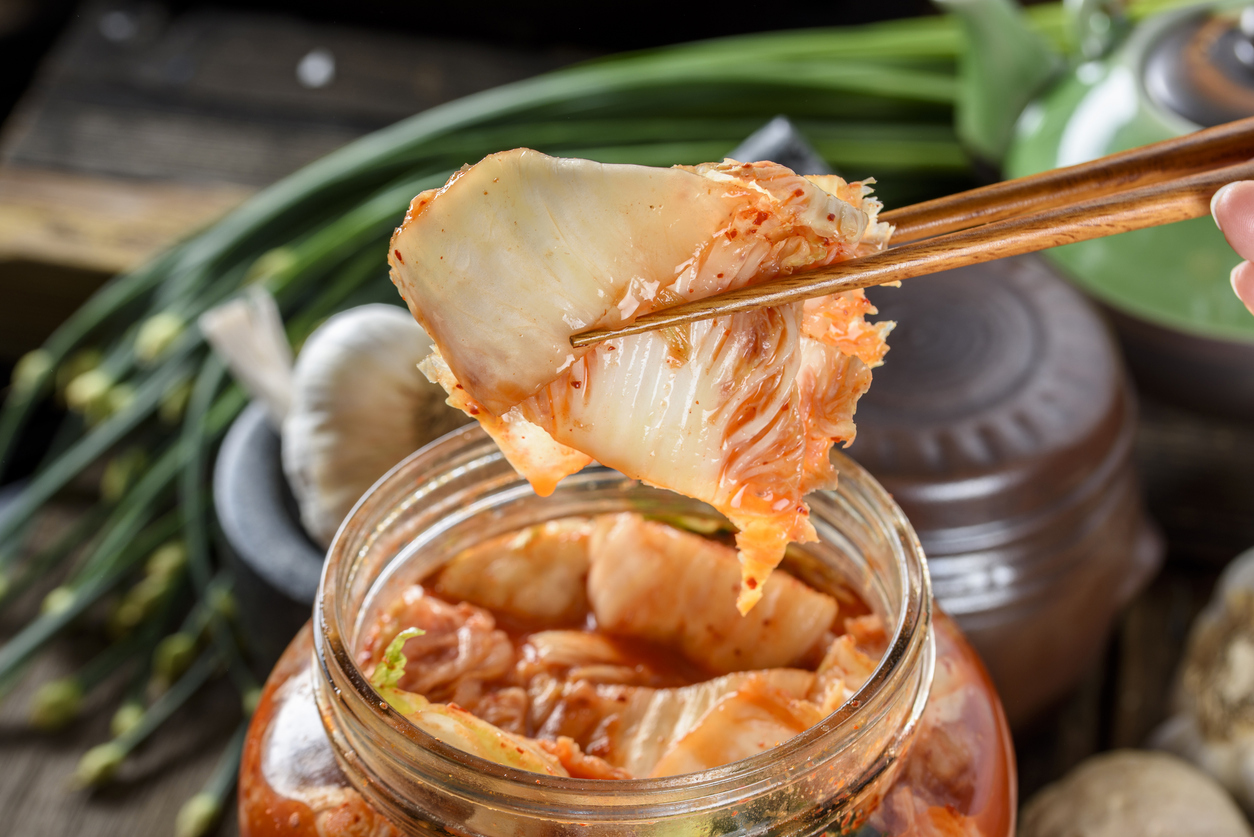
That is until recently, when it was recognized that fermented foods and probiotics may hold the key to binding microplastics before their uptake.
Due to their small size, microplastics consumed with food or water can traverse the tight junctions of the intestinal barrier and enter systemic circulation to be deposited in tissues and organs. But it’s now been found that certain kimchi-derived lactic acid bacteria have the ability to bind nanoplastics in the intestine, allowing them to be harmlessly excreted in the stool.
Researchers are now attempting to tailor probiotic strains to mitigate microplastic exposure. “Designer” probiotics to counter this newly-recognized scourge may become a thing.
Urolithin A for IBD . . . and more?
Intelligent Medicine listeners by now are familiar with Mitopure®️, a urolithin A supplement that boosts mitophagy, a plausible way of supporting mitochondrial function. Initially demonstrated to improve muscle performance in aging adults, urolithin A could theoretically improve cellular function wherever mitochondrial efficiency is crucial—for brain, heart, immune system, and skin rejuvenation.
Inflammatory bowel disease (IBD) comprises two main types, Crohn’s Disease and ulcerative colitis, affecting an estimated 2.4 to 3.1 million Americans—1 in 100. Current treatments with biologicals—drugs that blunt the immune response—have produced advances, but full resolution is elusive, and medication side effects abound.
Researchers at the University of Louisville found that urolithin A triggers a cellular defense system that helps repair the gut lining, increases production of protective mucus, and strengthens antimicrobial defenses while tamping down inflammation.
Precursor compounds of urolithin A are found in foods like pomegranates, berries and peanuts. But few individuals are endowed with the right microbiome characteristics to efficiently bio-transform these dietary polyphenols into sufficient urolithin A to regulate intestinal barrier function.
And more . . .
Short of full-blown IBD, it’s likely that many more millions of Americans suffer from low-grade intestinal inflammation—so-called microscopic colitis—that contributes to irritable bowel syndrome (IBS) symptoms. Furthermore, gut-barrier dysregulation, aka “leaky gut syndrome”, is thought to be the root of many systemic inflammatory and autoimmune disorders, offering more potential use cases for urolithin A supplementation.
Along these lines, another recent study found that urolithin A “can help the heart relax more effectively. The compound also reduced scarring and limited harmful enlargement of the heart . . . Animal models treated with urolithin A had improved measures of heart function by up to 80% compared to models which were not treated with urolithin A. The laboratory experiment revealed that urolithin A increased the heart tissue’s ability to relax and reduced harmful scarring, also known as fibrosis, compared to controls. The compound also reduced enlargement of heart muscle cells compared to controls, helping to preserve normal cell function.”
This opens the possibility that urolithin A may prove a valuable adjunctive therapy for a common form of heart failure in which the heart stiffens, a finding in millions of patients—so-called “heart failure with preserved ejection fraction (HFpEF)”—usually associated with female sex, aging, hypertension and diabetes.
Check out this episode of my weekly radio show, where we discuss some of these and other breakthroughs.