My undergraduate major was Anthropology. I was fascinated by the study of how humans have evolved and adapted to unique circumstances over the ages. While I didn’t go on to be an academic anthropologist, my training in that field has provided me with indelible lessons about human health and has shaped my understanding of how different cultural practices and diets have enabled our success as a species.
We tend to think of human history as a gradual but sure ascent from bare subsistence to innovations in agriculture and technology. These set the stage for the explosive growth of our modern era. Our current world view is centered around the notion of progress; we are destined to transcend constraints—hunger, disease, poverty, conflict, the vicissitudes of climate change, and even the limits of human intelligence.
We see the world through the lens of the progress we’ve made in the past few centuries, since the Renaissance, that first enshrined the scientific paradigm. This set the stage for the Industrial Revolution and a homogeneous world culture. It seems inevitable—but is it?
I was captivated by a recent read, Lost Worlds: How Humans Tried, Failed, Succeeded, and Built Our World – A History of Civilization Through Trial and Error, Ice Age to Bronze Age, by popular historian Patrick Wyman Ph.D. This sweeping account of humans’ emergence from scattered bands of hunter-gatherers to the Bronze and Copper Age super-states of the Near East, China, Meso-America, and the Mediterranean had me time-traveling back to my anthro classes.
Rather than steady linear progress, there were millennia of stasis, rise, fall, and even regression well before the Pyramids were built, and the ziggurats of Mesopotamia rose.
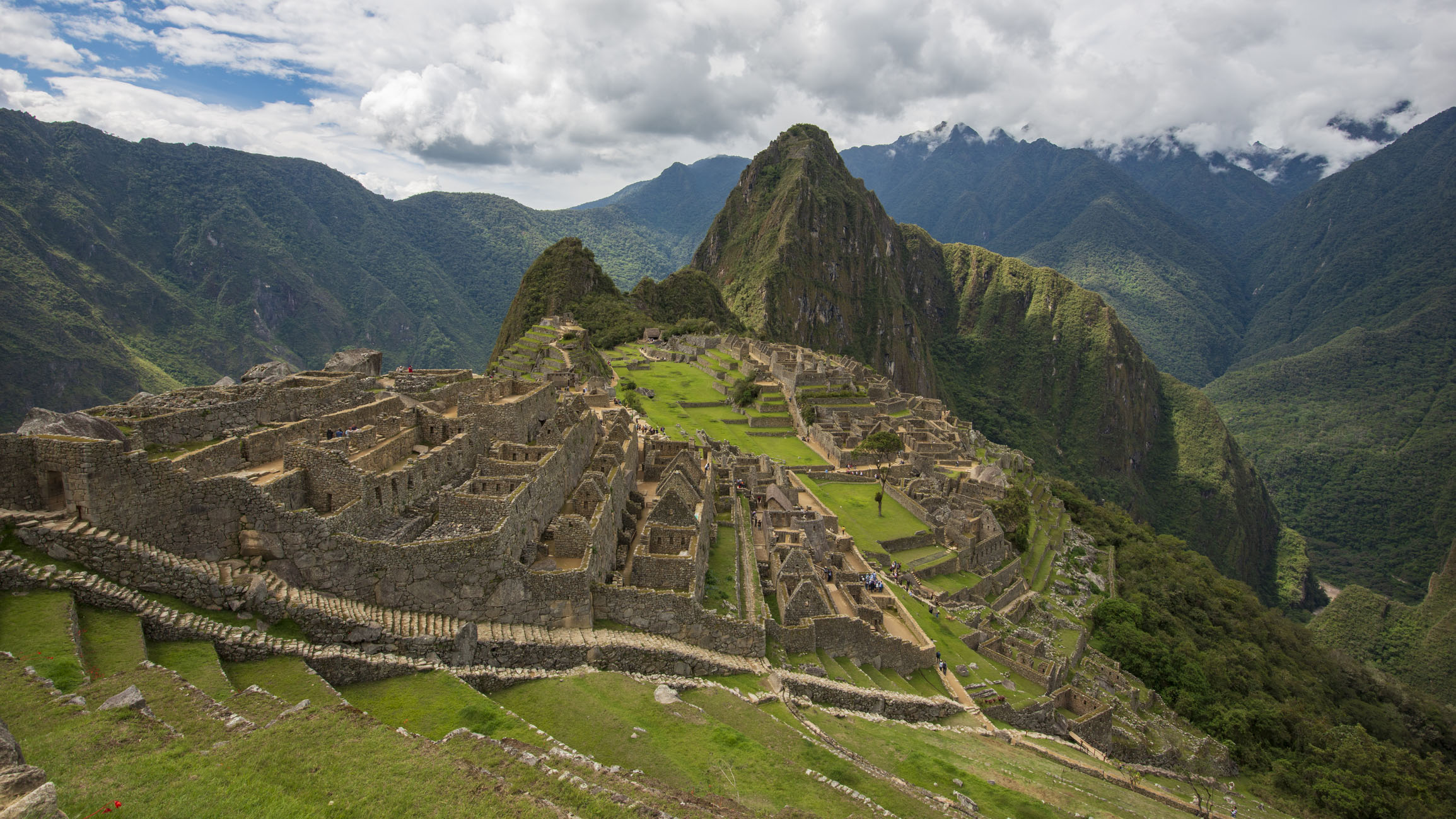
We’re all familiar with the Dark Ages after the collapse of Ancient Rome that dominated civilization for centuries—truly a “Thousand Year Reich” that Hitler sought to emulate. For centuries after the dissolution of the Roman Empire, wandering bands of medieval tribes roamed the desolate landscapes of Europe and the British Isles marveling at the engineering ingenuity of their forgotten forebears that had produced abandoned monuments of a mythic civilization. They stabled their horses in ruined Roman villas, incapable of reproducing the lost technology that had produced indoor heating and plumbing, metallurgy and crafts, soaring columns and arches, and sophisticated writing. For centuries!
Wyman plausibly contends many thriving communities arose at the dawn of the Neolithic era, as far back as 10 to 12,000 years ago, only to vanish as dead ends followed by prolonged Dark Ages that date many additional thousands of years before the ancient civilizations we’re familiar with were established.
And that’s not a pop-science notion; only recently have innovative techniques enabled us to piece together their past from scant traces of bones, pottery shards, flint arrowheads, and long-buried structures. Unlike popular digs like Pompeii, excavations are barely underway at some of these remote sites, and the majority of evidence lies uncovered.
There are many reasons why societies flounder: floods, volcanic eruptions, decades-long climate change, disease, competition for scarce resources, invasions by competing tribes. Civilizations can literally be victims of their own success: as populations soar, famines can become more likely; increased population density with urbanization and proximity to domesticated animals spawns epidemic diseases; concentration of authority by cruel elites can propel popular discontent that prompts societal collapse; increased reliance on domesticated crops like grains can cause famines and widespread nutritional deficiencies that shrink populations.
Things don’t always get better. The nutritional status of some early Neolithic farmers was decidedly worse than their more “primitive” Paleolithic hunter-gatherer forebears, who had a more diverse diet consisting of greater proportions of animal protein derived from big game, like mammoth, elk, antelope, and deer. Narrowing food choices produced evidence of degenerative changes seen in teeth and bone remains.
Moreover, many pre-agricultural societies were often more egalitarian, with less stratification than more “advanced” cultures. Crop surpluses led to concentration of wealth among elites who created caste systems, whose oppressed underclasses had limited food access and were work-ganged into monumental construction projects; their bones show evidence of shorter stature, earlier death, premature scoliosis, and wear-and-tear changes—even fractures—to vertebrae and limbs.
Why did agriculture supersede hunter-gatherers? Why did Neolithic farmers and herdsmen depart their Paleolithic Eden? Archaeologists have theorized about the “Luxury Trap”: As hunter-gatherers started returning to specific wild patches to increase natural yields, they began storing surplus to protect against harsh seasonal weather. With steady, storable calories, women weaned infants earlier. Instead of extended periods between births, agricultural women could have children every 1-2 years. This population boom created communities that could no longer survive on wild foraging, locking them into agricultural labor.
A similar “Luxury Trap” happened during the later Industrial Revolution, which launched dramatic improvements in productivity at the expense of the abysmal living conditions of early factory workers.
It’s our conceit that we’re the first civilization that has devastated our environment—even early bands hunted large terrestrial mammals into extinction, cleared forests with burning to raise crops and create pasturage, altered rivers with dams and irrigation channels, and denuded trees for shelter and fuel for their cooking fires.
Wyman writes: “Humanity’s capacity to alter the planet in the most fundamental ecological ways was a product not of the Industrial Revolution or the Space Age, but the Neolithic.”
Which begs the question: Is there anywhere on planet earth such a thing as “virgin forest”?
And, regardless of whether man-made climate change represents a significant contribution to our changing weather patterns, over the past millennia there have been dramatic shifts in temperature: the Sahara was once a rich savannah grassland teeming with game; Northern European forests were expansive tundra where now-extinct fauna roamed; the Amazon Basin was a temperate meadowland before it became impenetrable jungle; Asia and North America were connected via a landmass called Beringia, and England to Europe via the Doggerland, both now submerged beneath hundreds of feet of ocean. Over tens of thousands of years of human experience in our modern incarnation as Homo sapiens, there have been scores of climate changes. There was more to it than smoke from cook fires.
History and archaeology teach us that our capacity for violence and cruelty is immense. We’re neither products of a Rousseauian idyll of peaceful “noble savages”, nor of a Hobbesian every-man-for-himself free-fire zone. While some communities enjoyed long periods of peace and comity, others engaged in frequent warfare, conquest and plundering, as well as human sacrifice, and cannibalism.
We possess a civilized veneer, but the consequences of our savage impulses are only amplified by our advanced technology. Fear and mistrust of “The Other” seems baked into our DNA.
All of which should give us perspective on our modern age. Are we truly the crowning achievement of human progress? Is the U.S.—about to celebrate a scant 250 years of existence—a mere piker compared to now-vanished societies that held together for thousands of years and are now forgotten?
Do the many challenges we face—environmental pollution, sedentary lifestyle, over-reliance on ultra-processed food, dumbing-down via social media and heedless embrace of artificial intelligence, novel degenerative and iatrogenic diseases borne of abundance and medical overkill, political polarization and loss of confidence in our institutions, moral decline and spiritual alienation, the threats of warfare and terrorism, and yet another epic of accelerated climate change—place unsustainable pressures on our civilization that may be harbingers of our own demise?
The key to the survival of our species has been our remarkable adaptability to changing environments and circumstances. But will the unprecedented pace of modern change exceed our capacity to adjust? Psychologist Jonathan Haidt, a vocal critic of social media, writes:
“Our environments have changed gradually over thousands of years, but all of a sudden things are changing so quickly that a lot of our evolved systems that evolve for life in the physical real world, they’re wildly malfunctioning in this virtual world.”
The same might be said about our food environment—unmooring us from our gradual natural adjustments to traditional nutritional opportunities via the recent introduction of ultra-processed foods—overwhelming our genetic capacity to slowly adapt?
We should heed the lessons of history and not let contemporary civilization’s seeming success lull us into complacency. It’s merely by accident that we live in this brief instant of the human habitation of the earth that has spanned thousands of generations—each of whom equally believed in their primacy . . . and are now gone.