I’m freshly back from the American College of Nutrition 59th annual meeting in Seattle. It was an information-packed and inspirational meeting, offering an exciting roadmap for the future of nutritional medicine.
I’ve been involved in recommending diet and supplements for nearly 35 years. In 1989 I wrote my first book, The Diet-Type Weight Loss Program. It contained an elaborate questionnaire that scored personal characteristics to help the reader achieve a “match” to the right type of diet for them.
While there have been major advancements, in some ways the prediction paradigm hasn’t changed all that much. Your practitioner is likely to fall back on some stock “moves”:
- They start with some nutritional “verities” (but that’s where the trouble begins!)
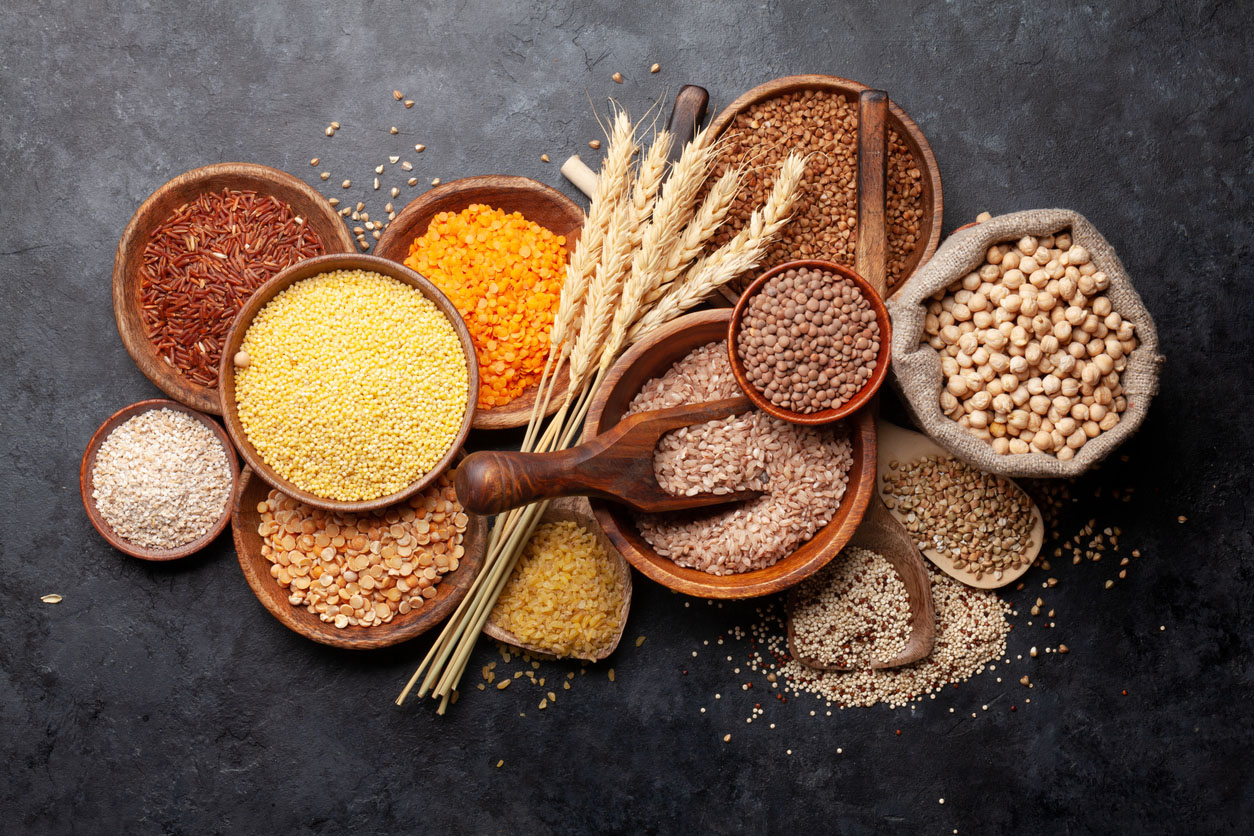
- They may be a dyed-in-the-wool vegetarian, inclined toward whole grains, fresh vegetables, and legumes; or like many conventionally-trained doctors and dietitians, their stock-in-trade may be the low-sodium, low-fat DASH diet.
- Alternatively, they might be an Atkins acolyte, and focus on limiting carbs while allowing generous protein and fat, perhaps with Paleo exclusions; the increasingly popular ketogenic diet may even be their favorite health optimization strategy.
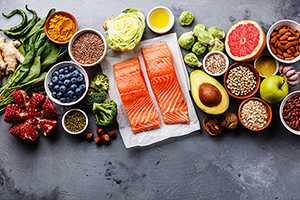
- Or they may triangulate, and offer patients some version of the Mediterranean diet which is intermediate in carbs, fats, and protein, emphasizing healthy sources, much like my own Salad and Salmon Diet.
But all these approaches partake heavily of the nutritional bias of the practitioner; in a sense, we marshal science—whichever studies we prefer—to buttress our preconceived ideologies.
So how have we as nutritional practitioners individualized diets for our patients?
- We’ve looked at blood tests, to determine, for example, if our patients are insulin-resistant.
- We’ve done allergy testing, which unfortunately has proven an expensive, unreliable way to tell patients how to eat.
- We’ve measured levels of vitamins and minerals, to see if patients need more via diet or supplements. But many patients—especially those who eat well and take supplements—are replete with nutrients. And yet, there may be value in pushing higher levels of certain vitamins, minerals and nutraceuticals or certain diets that aren’t revealed by expensive nutrient panels, whose accuracy hasn’t been well-validated anyway.
- We tell patients to “detox” via elimination diets, avoidance of toxins, and lifestyle advice.
- We’ve even invoked blood types, which have only passing relevance to optimal food choices.
- Alternatively, there are paradigms like Ayurveda and Traditional Chinese Medicine, that, while born in the pre-Scientific era, achieve some success at correctly matching body types to individualized diet and lifestyle recommendations.
- Then there’s the “cookbook” approach, which is really the way conventional medicine is mostly practiced: You diagnose a condition or a disease, and then you prescribe the diet and supplements (or, in the case of orthodox medicine, drugs) with scientific documentation of efficacy. But two individuals with the identical condition may respond to entirely different interventions!
This is not to say we’re not achieving great results with these methods; even generic diet and supplement advice can revolutionize a person’s health.
But there are many instances where this is not enough.
What if a person is perfectly healthy, but has some problematic family history, say, of premature Alzheimer’s Disease, cancer, or heart disease? Are they at risk? What can they do, other than follow some ideal “healthy” diet and lifestyle—whatever that is?
Alternatively, what if a patient is unresponsive to all the “right” moves? For example, there’s a subset of patients who respond paradoxically to a low-sodium diet—their blood pressure goes UP. And, while coffee is now considered “heart healthy” for most, for others it can cause anxiety, high blood pressure, and dangerous arrhythmias. There are even occasional patients who are unresponsive to fish oil, and for whom too much may actually be counter-productive.
It’s high time for saturated fats to have been vindicated, but it’s undeniable that for some patients, too much fat can accelerate disease progression. Even too much fiber—usually considered a nutritional “verity”—may backfire.
Is there a reliable way of predicting these reactions, or are we stuck in trial and error mode? How can we as nutritionists issue blanket recommendations in good conscience when there’s such abundant evidence of genetic and biochemical diversity?
I’m convinced that nutrition is about to enter the precision era by harnessing newly available tools of the “Omics” Revolution.
Underlying this are new developments in analytical power amplified by great leaps in computational capabilities via artificial intelligence and machine learning. Moore’s Law predicts these tests, now being pioneered in research settings, will soon be cheap enough to be accessible to the public.
The same technologies that underlie facial recognition in your phone, analyze tumor genes to match patients to appropriate cancer therapy, and monitor the bodily processes of astronauts at the International Space Station—can now be harnessed for novel forms of nutritional analysis.
In Part 2 of this article, we’ll see how omics will be applied to the challenge of offering precision individualized nutrition advice.