True confession: I’m a terrible patient. This is not uncommon among doctors. We spend so much time worrying about other people’s ailments that we tend to ignore our own vulnerabilities: “I already gave at the office!” we say to ourselves.
So it was that I found myself, at the age of 73, asking a colleague, while performing some routine blood tests, for a prescription for a home ColoGuard®️ test—well after the age currently recommended to begin colon cancer screening.
Recently, the U.S. Preventive Services Task Force moved the goalposts on its recommendation for baseline colonoscopy from age 50 to age 45. The reason: We’re seeing a dramatic uptick in the incidence of colon cancer among younger adults, highlighted by the premature death from colon cancer of Black Panther actor Chadwick Boseman at the age of 44.
In particular, African Americans seem to be at higher risk of early life colon cancer, which contrasts with traditional Africans, among whom, prior to Westernization, colon cancer was almost unheard of.
From 2010 to 2019, according to a review, the rate of early onset (age <50) GI cancers has increased worldwide, representing the most rapidly rising type of early-onset cancer. Their incidence has doubled over the past two decades.
Why colorectal cancer rates are soaring
There’s no single culprit, but a recent review fingers ultra-processed food as the prime suspect.
Other contributing factors may include obesity, frequent use of antibiotics that disrupt the microbiome, alcohol, environmental chemicals, glyphosate, lack of sunlight which produces vitamin D, sedentary lifestyle, or a history of ulcerative colitis. Of course, genetic factors, too, predispose to colon cancer; that’s why people with a family history of colon cancer are advised to start screening earlier and do it more often.
So, while healthy, I was overdue and thought to obviate the need for a baseline colonoscopy—the preferred way of screening—by opting for the heavily-promoted home ColoGuard®️ test.
ColoGuard®️ pros and cons
The ColoGuard®️ test is marketed as a screening test for people at low risk of colon cancer. If you have unexplained abdominal pain, blood in the toilet, a strong family history of colon cancer, have suffered from ulcerative colitis, or have had a previous colonoscopy that revealed the presence of pre-cancerous polyps, you’re better off going directly to a colonoscopy.
The main problem with the ColoGuard®️ is that it’s often a ticket to what you’re trying to avoid—a colonoscopy. In order to better detect pre-cancers, it’s so sensitive that it can pick up traces of suspicious DNA from benign polyps, which a high percentage of people have, especially as we get older. It’s estimated that when you have a positive ColoGuard®️, a subsequent colonoscopy only finds cancer 1.3-4% of the time. That’s a low yield.
The rest of the time, it’s a false positive—a colonoscopy reveals no problems whatsoever—or there are tiny benign polyps. Depending on the type, these might develop into cancer in 10-15 years—or never.
Occasionally, polyps are found that are bigger or whose pathology is more aggressive; while still benign, these engender a quicker recall for a follow-up colonoscopy to see if polyps reappear.
Worse yet, gastroenterologists claim—with some self-interest—the ColoGuard®️ can miss some pre-cancers, and that it’s no substitute for a thorough visual inspection.
To address these deficiencies, ColoGuard®️ has rolled out the ColoGuardPlus™️ test. Recently approved by the FDA, it boasts a 94% specificity (fewer false positives) and 95% sensitivity (it nearly always finds cancer if present). But it’s not yet covered by most private insurance, although Medicare Part B picks it up now. And it still will be triggered by small, inconsequential polyps.
That’s always the way it is with screening tests. The more sensitive they are, the more false alarms they’ll generate. In order to not miss cancer or dangerous polyps, a lot of people are subjected to further testing with accompanying high costs, burden to the medical system, inconvenience, anxiety, and, albeit rarely, danger of complications like bleeding or intestinal perforation.
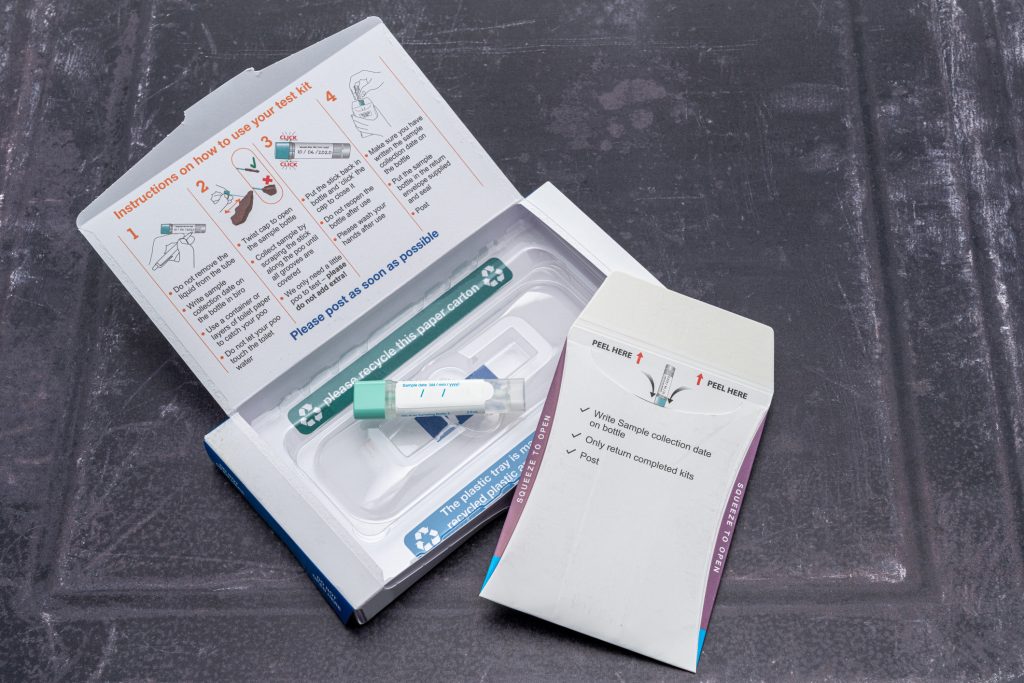
I opted for the original ColoGuard®️, and felt reassured when I saw an ad for it during the baseball playoffs. Following the directions like a champ, I collected a stool sample with their well-designed kit, then tried to appear discreet while handing in the return-mailer box at my local UPS. I crossed my fingers.
A few days later I got a text from the doctor who I’d gotten to prescribe the test. “Your test is POSITIVE!” he wrote. “Unfortunately, you’ll need a colonoscopy.” So much for dodging that rite of passage.
On to a colonoscopy
I arranged one with a veteran gastroenterologist I’d worked with over the years. The prep instructions arrived: A weekend of eating low fiber foods, followed by clear liquids, and then12 laxative pills to be taken with copious water—the night before and the morning of the procedure. Suffice it to say, they did the job.
But I wonder if such a one-size-fits-all approach is suitable for everyone. It might be overkill for older, frailer persons. I toughed it out and followed the procedure to the letter, afraid of the dreaded “poor-prep” which would necessitate a follow-up colonoscopy due to poor visibility on the first try.
The anesthesia was pleasant and well-tolerated. I slept unaware through the procedure and woke up no more groggy than I might’ve been after a night drinking a couple of beers. I joked with the nurse anesthetist over whether she could slip me a vial of Propofol to knock me out for my next long inter-continental flight, like a space traveler in suspended animation, with some Versed to wake me up just as we prepare to land.
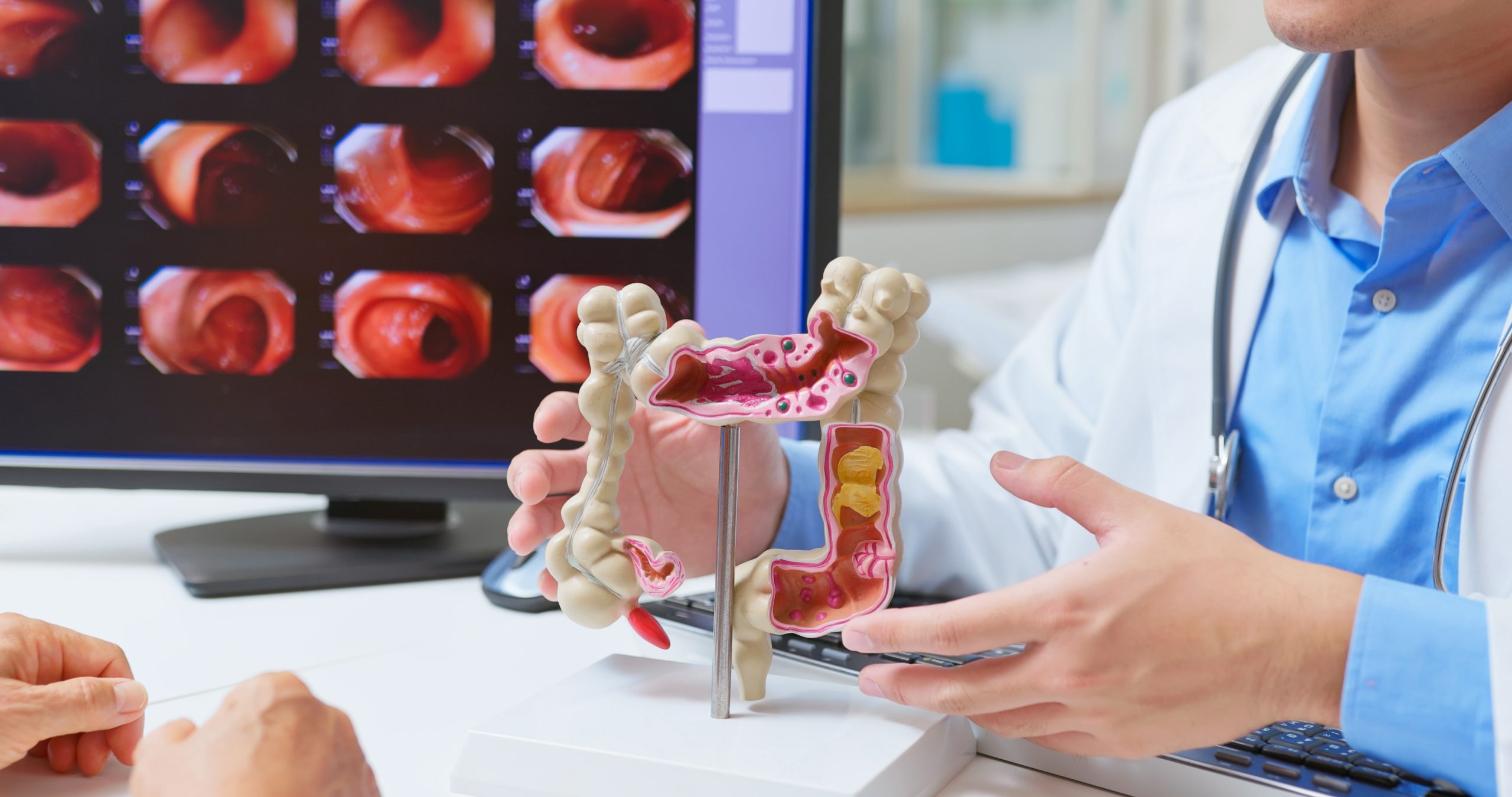
There was no suspense. My gastro came right to my bedside and informed me that, as he had suspected, the positive ColoGuard®️ test was triggered by a tiny benign polyp, no bigger than a pencil eraser. A few days later the path report confirmed it was the most benign kind of polyp, a small tubular adenoma.
Relieved, I bantered with my gastroenterologist colleague: “You know, when they first came out with those ColoGuard®️ tests, I thought they’d put you guys out of business. But now I see they actually generate more colonoscopies than they prevent!”
The doctor smiled, perhaps a little too readily: “Me too! But I guess it didn’t turn out that way. Well, I’ve gotta go, I’ve got four more colonoscopies to do.”
The controversy over colon cancer screening
Stool screening and colonoscopy undoubtedly save lives, but the extent to which they do so remains controversial. Remember when Katie Couric underwent one live on TV to underscore the importance of preventive after her husband died of colon cancer? It did a lot to raise public awareness.
Colorectal cancer is the third leading cause of cancer death; One in 24 people will be diagnosed with it in their lifetime. Over 50,000 people die of it in the U.S. every year.
It’s been claimed that colonoscopy screening can reduce the risk of dying from colon cancer by around 75%. That’s because colorectal cancer, if caught early, unlike many other cancers, is mostly curable. If discovered when you already have trouble going to the bathroom, or fill the toilet with blood, it’s often too late to do more than slow the progression of the disease. Unfortunately, even with current screening, only one in three people are diagnosed with early, more treatable colon cancer.
But a recent Swedish study, published in the New England Journal of Medicine, put colonoscopy in the cross-hairs. It found a mere 18% reduction in death—comparable to what might be achieved with the cheap, old-fashioned fecal occult blood tests that pre-date ColoGuard®️. “Colonoscopy does not appear to be as effective as previously thought in terms of colorectal cancer prevention,” it concluded.
It estimated that well over 400 people would have to be unnecessarily screened to save one person from colon cancer death.
U.S. gastroenterologists quickly countered that predominately white Scandinavians might be healthier than their more overweight, multiracial American counterparts, Swedish colonoscopists might not be as well-trained as U.S. gastroenterologists, and the sample of people who dutifully showed up after being invited to a colonoscopy might be tainted by a “healthy-user bias”. But the questions linger.
Here’s another thing about colonoscopies: Routine screening with them is not recommended for individuals over 75. So, if you’ve had one or more of them that were normal in middle age, you can stop having them when you’re an advanced septuagenarian. If you’ve had polyps, your doctor might make an exception, but you’re usually home-free in your 80s.
Why? Because colon cancers are very slow growing; it might take many years or decades for even a small “pre-cancerous” polyp to develop into an aggressive cancer. The ten or twenty or so additional years allotted to a 75-year-old would not be likely to allow time for a dangerous cancer to develop and threaten their life before another malady or old age would likely claim them.
Preventing colon cancer
When it comes to prevention, think weight optimization, avoidance of ultra-processed foods, encouragement of prebiotic fiber and polyphenol-rich foods, and exercise.
Cruciferous and allium family vegetables, green tea, and lycopene-rich tomatoes seem to confer benefits, as does vitamin D, from sunlight or supplements. Excess alcohol increases risk.
And although a “baby aspirin” a day as a universal preventive against heart disease has fallen into disfavor due to bleeding risks, a recent study highlighted the protective effects of aspirin in patients at high risk for colon cancer, like those with aggressive polyps or survivors of a previous colon cancer who retain their colons.