A revolution is underway in wearables and trackers. We can now monitor and score our exercise, our blood pressures, our caloric and macro- and micro-nutrient intake, our blood sugars, our heart rates, our sleep duration and quality, even our sexual activity! What are the pros and cons? On the one hand, we have a wealth of information we can use to set goals and motivate ourselves; On the other, all that self-awareness might be burdensome. Or might “paying it forward” with exercise engender other less healthy behaviors via “moral licensing?” Should we be turning sleep into a competitive activity? Do we really need to stand up and walk around every time our Apple Watch pings us with an alert? What are the device options, ranging from the simplest to the most complex? What are the advantages and drawbacks of the Apple Watch? How do devices that offer wrist pulse measurement compare to devices that use traditional chest straps to record heart rate? Which devices are submersible? Which are stand-alone, and which require pairing with iPhone or Android devices? We cover Apple Watch, Garmin, Polar, TomTom, Mio, Fitbit, Jawbone, Basis and more. Should you go simple and cheap, or expend big bucks for an all-purpose professional-quality tracker? Bottomline, you can’t have it all, and there’s always a trade-off in selecting a device that’s right for you. Click HERE for part 2.
Are you doing everything you can to protect your brain health?
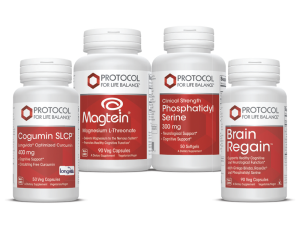
There’s a lot of buzz about “brain nutrients” these days. Protocol for Life Balance leverages the most compelling research to offer a suite of supplements specifically to designed to support neurological health and cognition.
Featuring Cogumin SLCP, Magtein®, Phosphatidyl Serine, and Brain Regain, this collection contains everything you need to nourish your brain.
Our virtual voicemail is open 24/7, so there's no need to wait to submit your questions for Dr. Hoffman. Leave a message, and you may hear your question featured on the Intelligent Medicine radio program!