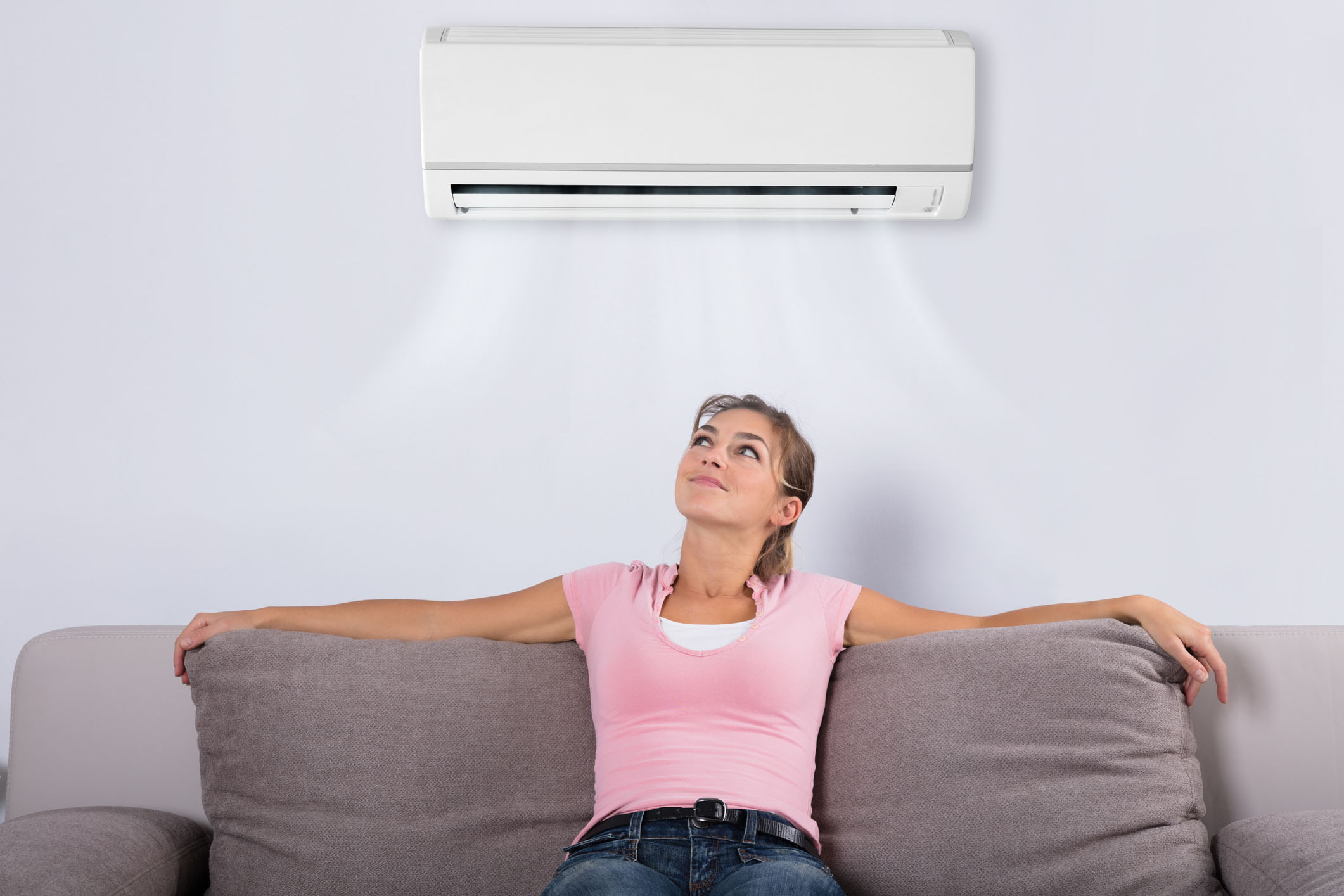
Temperatures soared in the U.S. over the 4th of July—but we’re used to that. Besides, 90% of us have air conditioning.
Not so in Europe, which is unaccustomed to heat waves. After all, London is farther north than Calgary, with Amsterdam and Berlin even farther north; Montreal is south of Paris. In defiance of latitude, there’s no doubt that European summers are getting hotter.
In late June, temperatures in Paris reached 104° on two consecutive days; that’s happened on only three days since record-keeping began in the 19th Century, in 1947, 2019, and 2022. Berlin also hit 104°, setting an all-time record.
Regardless of the debate over to what degree human activity is hastening climate change, Europe, especially, is experiencing a warming trend, and they’re largely unprepared. Over millions of years of human evolution, dramatic temperature fluctuations have driven waves of migration and adaptation. Factories, power plants, cars, planes, and data centers can’t be blamed for the aridness bout in Africa that drove our ancestors north 90,000 years ago to populate Eurasia.
It’s our fault?
Yet some European politicians have seized the moment to blame America for our energy profligacy; they claim we luxuriate in our air-conditioned meadow mansions and drive gas-guzzling SUVs that poison their climate! Said the mayor of Paris:
“As the second-largest emitter of greenhouse gases in the world, you bear a significant responsibility for global warming and the consequences we, in France, are experiencing. Your cities, ‘90% air-conditioned,’ are not unrelated to this.”
By contrast to us, only 25% of French homes, and a mere 5% of homes in the UK have air conditioning. In Germany it’s only 6-19%.
Part of the problem is that temperatures over 90°, much less over 100°, were once rare events. Global warming has caught them unprepared.
Why Europeans balk at air conditioning
Additionally, the price of energy is far higher in Europe, where Green parties have striven to keep citizens’ carbon footprints low. For better or worse, environmental protection initiatives have constrained electricity production. Windmills dot the European landscape and hug their coasts, but can’t keep up with demand.
Ordinary electric fans seem to have succored Europeans for many decades, but physics dictates that there are diminishing returns when a certain threshold of heat and humidity is reached; they work passably in hot, dry conditions, but when temperatures reach the 90s and humidity exceeds 90% the air is saturated with moisture, so sweat cannot evaporate to cool the skin. The fan merely blows hot, damp air at you.
There are even municipal ordinances and housing rules that discourage or tax air conditioners. Often cited by foes are the effects of the hot exhalations of air conditioners on crowded urban exterior environments; while cooling interiors, they raise outdoor temps.
In some parts of Europe, you even need a letter of medical necessity from your doctor to obtain the right to install a cooling unit. That diktat runs counter to the spirit of our own Declaration of Independence, which enshrines Americans’ right to the “pursuit of happiness”—which presumably includes coolness.
Deeply ingrained cultural beliefs
But air conditioning also faces cultural attitudes. German philosopher Friedrich Nietzsche famously declared “Was mich nicht umbringt, macht mich stärker”—what doesn’t kill me makes me stronger. This epitomizes the outlook of many Europeans, who look down on people relying on aggressive indoor temperature control as wusses. After all, in winter they famously brave meat locker indoor temperatures with layers of sweaters, heavy blankets, and comforters—and in summer simply open the windows or head to a summer retreat in the mountains, on a lake, or on the North Sea or Baltic coast.
Part of what underlies Germans’ disdain for air conditioning is their ingrained fear of what they call Zugluft: it’s a unique cultural obsession with the ill-effects of drafts. Cold streams of air are thought to cause respiratory infections, stiff necks, and muscle tension. Many Germans believe that exposure to a sudden cold draft compromises the immune system and leads to sickness.
The French, too, have a word for it: courants d’air—literally, currents of air. My mother, of French background, would frequently complain that they made her arthritis worse. It was years before our family surrendered to the need for window air conditioners, even in hot Southern California.
Tell that to the thousands of vulnerable Europeans who are now succumbing to heat stroke inside non-air-conditioned homes, apartments, elder care facilities, and even hospitals! There’s some serious rethinking underway over there.
I can certainly attest to the benefits of air conditioning for maintaining my productivity during hot summer months—this column might not have been possible otherwise. I can’t imagine sustaining my output of researching, writing, and broadcasting amid harrowing heat and humidity. And I live in the relatively temperate Northeast . . . yet mid-20th Century New Yorkers once resorted to hauling their mattresses out to fire escapes to beat the oppressive mid-summer heat and humidity.
Are we too coddled?
On the other hand, there’s something to the notion that we, as a species, are undergoing a “Comfort Crisis”, as so aptly described in a book of that title by Michael Easter.
He contends that modern life’s excessive comfort is undermining our resilience and leading to a crisis of degenerative diseases and psychological maladaptation because evolution has primed our bodies and brains to require challenges.
This notion of “hormesis” envisions the salutary effects of bouts of exposure to extremes: strenuous physical activity, periods of intermittent fasting, and indeed, exposure to heat and cold. “Doing hard stuff” is literally programmed into our DNA.
Air conditioning harms
And there are more knocks on air conditioning. It is often said that indoor air is worse than outdoor air. By hermetically sealing ourselves inside “energy efficient” homes and offices, we may concentrate pollutants. While keeping seasonal allergens out, indoor air may be two to five—and occasionally up to 100 times—worse than outdoor air, laden with outgassing from furniture, paints, finishes and carpeting, household products, car exhaust and lubricants from adjacent garages, as well as pet dander, dust mites, and combustibles from stoves and boilers—even carbon dioxide buildup from our exhalations.
Add to that the hazards of bacterial and mold accumulation in poorly-maintained ductwork and air conditioner filters, and you magnify toxic exposure.
So maybe Europeans have gotten something right after all. Over there, most hotels still enable you to at least open windows to let in fresh air.
Humans are uniquely adapted to the heat
Humans have developed natural ways to adapt to heat extremes. We have elaborate cooling systems via our perspiration. By contrast with other primates, we have far more sweat glands. We’re less hairy than our ape-like forebears which allows cooling via evaporation. We stand upright, which presents a smaller body profile to the sun than four-legged animals.
Evolution has endowed inhabitants of hot climates with tall, thin physiques and long limbs, which afford more surface area for cooling. Inuit well-adapted to cool climates have shorter limbs and more rotund stature with the capacity to store more insulating layers of subcutaneous fat.
The shape of your nose may be a clue to the climactic adaptation of your forebears. Populations in hot, arid climates evolved narrower, taller nasal passages. This aids in warming and humidifying inhaled air but is also structured to recover moisture during exhalation. Alternatively, broad and flat noses facilitate heat exchange, like the Breathe-Right nasal strips that some athletes favor.
Who’s more at risk?
There are several categories of medication that impair our heat tolerance: they can accentuate dehydration, like diuretics; boost internal temperature like stimulants and overzealous thyroid replacement; impair sweating, like bladder medications, beta blockers and antihistamines; or affect heat regulation by the brain’s hypothalamus, like antidepressants and antipsychotics.
Add to that the effects of deconditioning, aging, and overweight and you’ve got a perfect storm for the vulnerable elderly.
Why then has our culture enshrined “No sweat!” as a virtue? Not to mention our slathering on of chemical antiperspirants to stultify our sweat glands?
Embrace the heat—or get out of Dodge
When it comes to your body’s innate air conditioning system, it’s “Use it, or lose it!” Regular sauna bathing accustoms the body to extremes of heat and revitalizes your capacity to perspire. So, too, do intense bouts of exercise. Therefore, paradoxically, embrace opportunities to break a sweat to enable yourself to better resist heat.
Pro-Tip: Spicy food induces sweating, so reach for the hot sauce, and fight fire with fire, as do many denizens of hot climes.
My solution: I’ll be foregoing that summer vacation to sweltering Europe and head instead to Iceland and Greenland for a refreshing late August North Atlantic cruise!