Let’s talk about President Trump. Not that we aren’t inundated with a torrent of (contradictory) opinions about his policies every single day.
No. Rather, because his recent diagnosis of chronic venous insufficiency is a teachable moment.
Chronic venous insufficiency (CVI) is a common condition affecting a significant portion of adults; estimates vary, but often indicate up to 40% of the U.S. population. The National Institutes of Health (NIH) notes between 10% and 35% of adults have CVI in the U.S.
I recall my dad had bands of brownish discoloration on his lower legs. He frequently wore custom elastic stockings that prevented blood from pooling around his ankles. He attributed his problems to forced marches during infantry training in WW2; then, gonzo army surgeons performed botched vein-stripping operations on him that only further compromised his circulation.
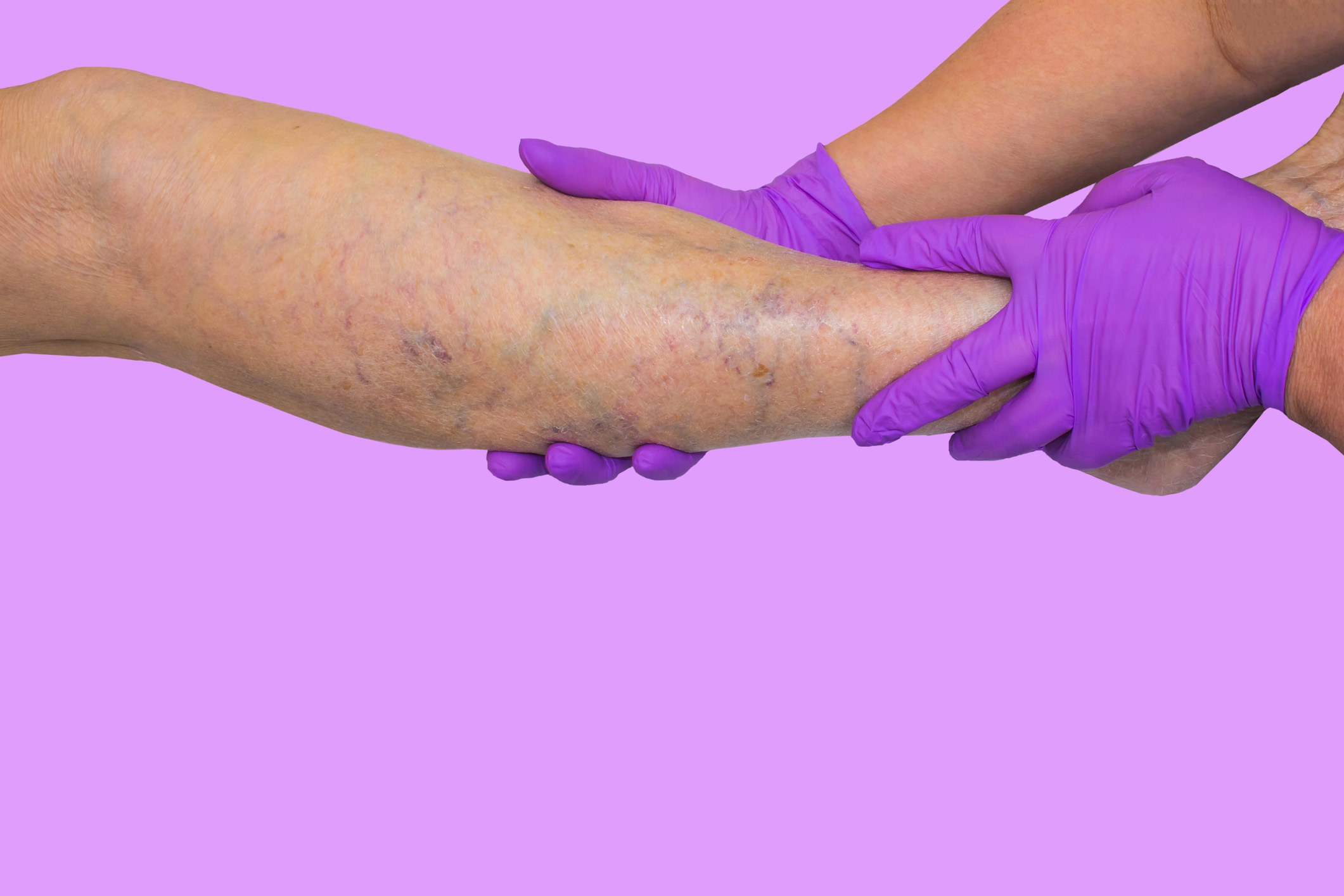
Arteries bring blood to the lower extremities, assisted by gravity. Veins return the blood to the heart, but with age, they lose their elasticity and the valves within them become leaky and less able to staunch the backflow of blood.
Tired, Achy Legs . . . and Worse
The result is distended veins and swollen legs and ankles, accompanied by pain and heaviness. As blood pools in the tissues, it deposits iron, resulting in brownish discoloration—“brawny edema”.
When these veins are superficial, the problem may be merely cosmetic—as with small spider veins, that can be easily sclerosed by injection with a special solution, or lasered.
When deeper veins are affected, pooled blood may be susceptible to clotting, resulting in deep vein thrombosis (a DVT) that can be life threatening when the clot migrates upwards to the lungs and creates a pulmonary embolus.
Economy Class Syndrome
That’s probably why Trump’s doctors, in an abundance of caution, undertook an evaluation with Doppler ultrasound, especially in view of the fact that the President spends an inordinate amount of time in planes; the term “economy class syndrome” has been coined to describe the plight of travelers who develop swelling and blood clots in their legs due to prolonged immobility.
(Which is one of the reasons they ply you with fluids on planes to prevent the dehydration which could cause your blood to sludge; going to the bathroom has the added benefit of making you get up to walk)
Because they’re at risk for DVTs, some CVI sufferers are prescribed blood thinners. Trump is said to already take aspirin as a cardiovascular preventive.
If severe or prolonged, CVI can result in leg ulcerations, which are hard to heal because poor circulation hampers wound healing.
Vein problems are sometimes exacerbated when congestive heart failure or kidney or liver problems contribute to excess fluid accumulation; it’s only then that diuretics may play a role in alleviating lower extremity swelling.
And yes, diet matters. Removing excess sodium from the diet is often recommended for CVI. In addition to helping shed pounds, a very low-carb regimen rids the body of excess fluids, relieving edema.
Exercise for CVI?
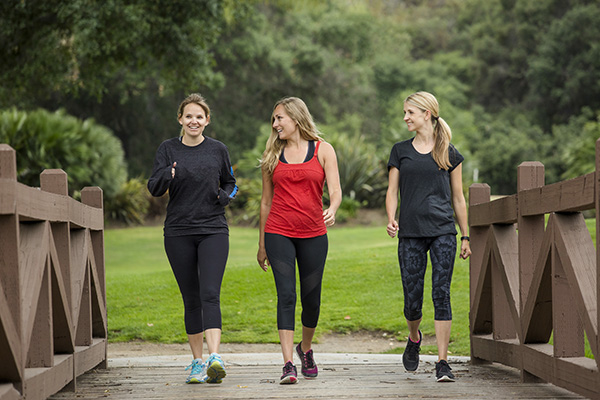
Absent forced marches with heavy field gear, moderate walking can be helpful to forestall progression of CVI because the rhythmic contraction/relaxation of calf muscles pumps blood upward against gravity; by contrast, high volume running may make CVI worse because of the repetitive concussion. I’ve seen dedicated runners with signs of venous stasis changes in their legs and ankles.
CVI is more prevalent in women, especially those who are middle-aged or older or who have had multiple pregnancies; the downward pressure of the fetus impairs blood return from the lower extremities. Similarly, obesity and constipation hike the risk of vein problems.
Natural Alternatives for CVI
Aside from operations (ligation or stripping), warm compresses and NSAIDs for pain, avoidance of prolonged standing or sitting, leg elevation, and support stockings, there are limited conventional options for sufferers of CVI. But there are promising natural alternatives.
Chief among them are rutosides, a group of flavonoid compounds found in various plants, often referred to as rutin or vitamin P. They are known for their antioxidant and anti-inflammatory properties and have been studied for their potential benefits in treating conditions like CVI and post-thrombotic syndrome (PTS), a complication of deep vein thrombosis.
Rutosides are found in citrus fruits, asparagus, capers, buckwheat (especially in Himalayan Tartary Buckwheat) and other plants.
“Vitamin P”
I did a little digging and found a 1949 review that describes the claim of discovery of a new vitamin by German researchers in 1936—dubbed “Vitamin P” (Permeabilität). It was isolated from Hungarian paprika and was found to influence capillary permeability—the leakage of fluid from tiny blood vessels that causes tissue edema.
Examples include rutin, hesperidin, diosmin and roxerutin. Rutosides may help reduce swelling and skin changes associated with CVI. Studies are exploring their potential for preventing or treating PTS.
Proanthocyanidins
Combining rutosides with proanthocyanidins like Pycnogenol, or its cut-rate alternative, grapeseed extract, seems to amplify their effectiveness for CVI. According to a study:
“Proanthocyanidins may protect the blood vessels and cardiovascular system. It does this by stopping the breakdown of collagen . . . Studies have found that grape seed extract may help symptoms of chronic venous insufficiency . . . Grape seed extract may also reduce leg swelling.”
Studies of Pycnogenol have shown it to possess “efficacy in alleviating the subjective symptoms of venous insufficiency (pain, muscle cramps, heavy legs)”. It’s even been suggested as a pre-flight preventive of airborne leg swelling and discomfort.
Horse Chestnut
Horse chestnut, a traditional remedy for CVI, seems to work in a slightly different way. It contains escin, which has been shown to inhibit the activity of hyaluronidase, an enzyme involved in tissue breakdown. Hyaluronic acid is an important “tissue glue” that, when disrupted, invites swelling and inflammation.
A Cochrane Collaboration review concluded “The evidence presented suggests that [horse chestnut extract] is an efficacious and safe short‐term treatment for CVI”. One study even suggested horse chestnut was comparable to compression stockings for swelling relief.
Butcher’s Broom
Long recommended for CVI, a recent study of 166 women suffering from chronic venous insufficiency found:
“There were significant differences between the treatment groups and placebo for the change of leg volume after 8 and 12 weeks of treatment, for changes in ankle and leg circumferences after 8 and 12 weeks of treatment, and for the changes in subjective symptoms, heavy tired legs and sensation of tension (week 12).”
Gotu Kola
Centella asiatica, often known as gotu kola, is said to strengthen vein walls by stimulating the production of collagen and elastin, which are crucial connective tissues that form the internal lining and walls of veins, improving their structure and function. It’s claimed to be particularly beneficial for conditions like varicose veins and chronic venous insufficiency by improving circulation, reducing swelling, and enhancing vascular tone.
Proteolytic Enzymes
Bromelain and Nattokinase are substances that break down proteins. A derivative of pineapple, bromelain is popular as a meat tenderizer; nattokinase, a byproduct of soybean fermentation, targets fibrin, the mesh that holds blood clots together. Both lay claim to relieving the discomforts and swelling of CVI by removing cellular debris and down-regulating inflammation.
These Therapies Really Work
One of my most memorable vein cases was that of a young woman who, after several pregnancies, had experienced a blood clot in her thigh for which she was treated with blood thinners, but with the lasting aftermath of nagging leg heaviness and aching (PTS). Indeed, there was a two-inch discrepancy between the circumference of her affected leg and her normal limb.
Applying a combination of the above approaches, she achieved complete relief within three months. I remained on her Christmas card list for decades!
Maybe one of those MAHA influencers can pierce the iron medical cordon surrounding the President and get him to employ some of these safe, effective treatments. Regardless, if you’re a CVI sufferer, you can easily access them for yourself.