Q: In a recent segment, you discussed the possibility of HDL being too high, and the “high” figure you mentioned was anything over 60-80. My last blood work showed an HDL level of 133, and a total cholesterol figure of 260. Of course, the doctor mentioned statins, and I declined, letting her know that I would never consider taking a statin. Should I be concerned about the very high HDL, and if so, what steps would you suggest I take?
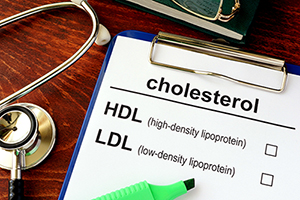
A: Traditionally, we think that high HDL—the “good cholesterol”—is highly protective against heart disease. For each four-point increase in HDL, it’s been estimated that there’s around a 10% reduction in the risk of cardiac events.
Simplistically, this friendly cholesterol scavenger is said to travel through the bloodstream and transport “bad” cholesterol (LDL) away from the arterial surfaces, where it can contribute to atherosclerosis.
The better your total cholesterol to HDL ratio, the lower the risk is said to be. A ratio of 3:1 or less is considered optimal. On that basis, the questioner would qualify as very low risk, with a ratio less than 2:1.
But a recent study from Denmark has cast some doubt on that generality. After surveying more than 100,000 men and women for an average of 6 years, they discovered a “sweet spot” for HDL: Men with the lowest risk of heart disease had an HDL of 73; for women, the ideal HDL was 93.
But men with extremely high HDL levels – ranging from 97 to 115 – had a 36 percent increased risk of death. That risk doubled among those whose HDL exceeded 116. Women with HDL levels above 135 had a 68 percent increased risk.
What casts some doubts on the conclusion that high HDL is bad is that in the Danish study instances of extremely high HDL were rare: only 2.3 percent of the men had levels exceeding 97, and 0.3 percent of the women had HDL above 135. This means that the study’s findings were based on relatively few cases.
It’s not entirely clear why ultra-high HDL might sometimes be bad. A clue comes from the resounding failure of a new class of heart disease prevention drugs—which logically enough were designed to raise HDL.
These “CETP inhibitors” crashed and burned after clinical trials showed they may have actually increased the risk of heart disease despite raising HDL. It appears that CETP inhibition may have an unforeseen adverse effect on circulation. It may be that individuals with ultra-high HDL have a genetic defect deficiency of CETP, which simultaneously hikes their HDL but also their risk of heart disease.
Alternatively, some persons with very high HDL might have an underlying medical condition, like hypothyroidism, primary biliary cirrhosis, or alcoholism.
Additionally, it appears that the protective effects of HDL—itself an anti-inflammatory compound—may in some cases be overwhelmed by high levels of inflammation. Elevated hs-CRP—a cardiac-specific inflammatory marker—may render a high HDL less heart-healthy.
That being said, very high HDL is not usually something to be worried about—in my experience it’s almost invariably a good thing. The best way to find out whether your high HDL is causing cardiovascular problems is to obtain an EBT heart scan to detect the presence of coronary calcium, a predictor of heart risk.
And what are the long-term effects of lowering cholesterol artificially, especially if you’re older? If you’ve made it to 75 years age without symptoms of heart disease, chances are statins won’t do you any good. The results of a recent study led one of the authors to conclude: “These findings indicate that statins may be producing untoward effects in the function or health of older adults that could offset any possible cardiovascular benefit.”
BOTTOM LINE: Stick to your guns—I doubt you’re a candidate for a statin! And don’t even bother to take a supplement to lower your cholesterol unless you have significant plaque. Let’s shake our obsession with cholesterol; it’s only fueling a bonanza for the BigPharma makers of cholesterol-lowering drugs.