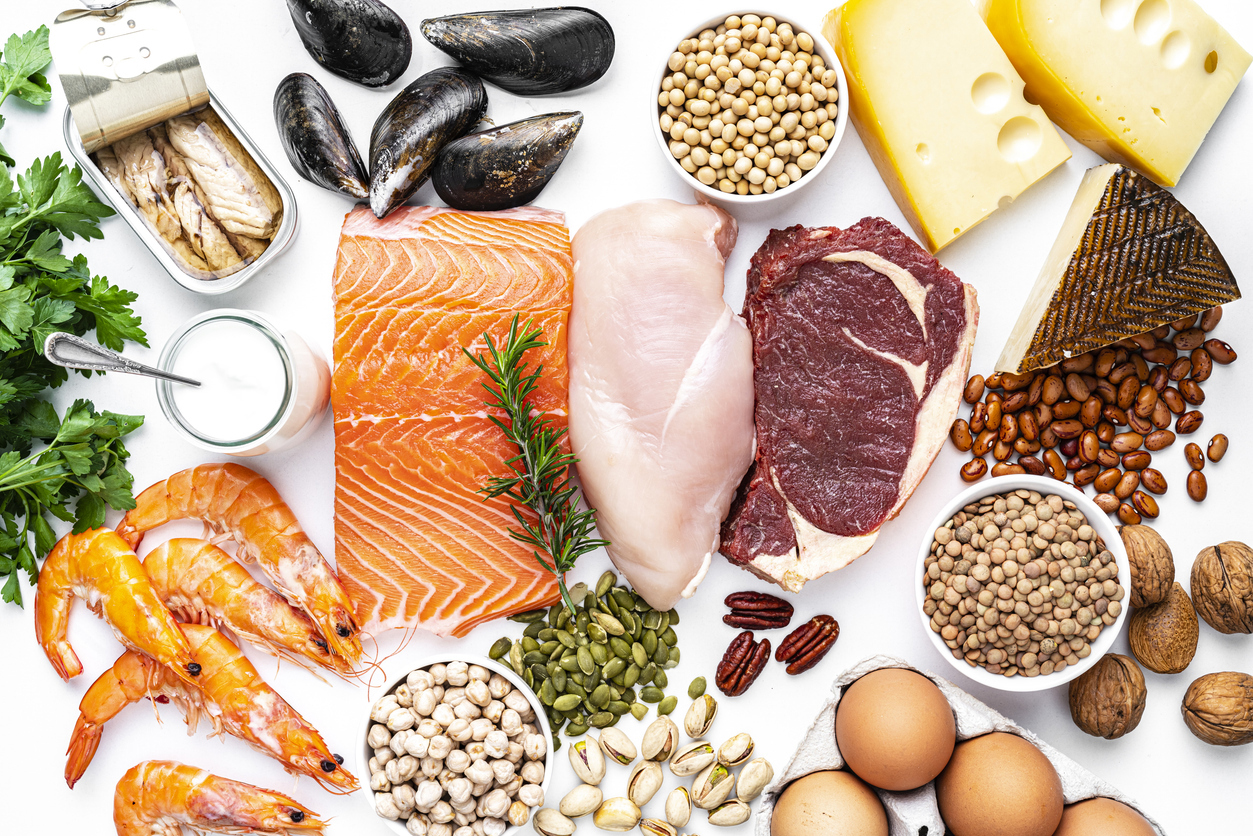
Once again, consumers are experiencing whiplash as health authorities and the media just told us less protein is healthier for us. Another switcheroo—think coffee, alcohol, egg yolks, red meat, salt, and high-fat dairy—scientific consensus has flip-flopped on so many diet items.
Didn’t the most recent iteration of the U.S. Dietary Guidelines for Americans (DGAs) invert the pyramid, increase recommended protein requirements, and up permissible contributions from animal protein, including much-maligned red meat?
Gary Taubes, a frequent guest on Intelligent Medicine, whose background is as a science journalist—and a notorious critic of the low-fat diet paradigm—has said of nutritional science:
“We all want to know what to eat and how to eat healthy. And we have a nutrition research community that won’t do the hard work to really establish what the reliable knowledge is. And then we have intermediaries and nutrition journalists and the social influencers who don’t really care. They just see their job as reporting what they’re told by the researchers as though it’s true, and yet they should know that it’s not.”
Last week, the public was regaled with headlines like these:
- “Could eating less protein help you age better and live longer?”—Time Magazine
- “High-protein diets are everywhere – but a review of 350 studies suggests eating less protein may actually support healthy aging”—Women’s Health
- “Study suggests eating less protein could be key to healthy aging for most adults”—ABC News
Just another MAHA fad?
It’s like mainstream media is piling on to bash RFK Jr’s promotion of the new DGAs, which have unleashed a torrent of protein-fortified products. A recent survey found that 70% of U.S. adults are striving to obtain more protein in their diets.
I’ve tackled this subject before in a recent newsletter article: “What’s so controversial about the new Dietary Guidelines?” I wrote:
“The previous recommendations were based on obsolete, decades-old studies that measured nitrogen balance, the bare minimum necessary to prevent breakdown of muscles and organs. Up-to-date science highlights the role dietary protein plays in supporting muscle reserve, especially when teamed with resistance exercise. Using the threshold of 0.8 grams per kilogram per day for a 175-pound man, that translates to a skimpy allotment of just six ounces of chicken plus three ounces of cheese per day. It’s reasonable to recommend more protein for active adults, especially for seniors striving to fend off sarcopenia.”
The “study”
What does the supposedly definitive “study” actually say?
It’s not really a true study; it’s merely a review. A study would entail correlating the protein intakes of hundreds, perhaps thousands, of individuals under carefully controlled conditions, matched for countless lifestyle variables, followed for decades, with eventual health and aging outcomes that would confirm the superiority/inferiority of high vs. low protein consumption. It would be a monumental task—practically insurmountable.
Rather, despite its encyclopedic curation of 350 studies, the review references few actual human studies, and they are of short duration. Moreover, the human studies, of necessity, don’t tell us whether people were healthier, aged better, or lived longer—instead, they rely on surrogate markers: These are biochemical signatures like blood glucose, insulin resistance, insulin-like growth factor (IGF-1), and lipid levels that may or may not translate to better health outcomes.
Much of the rest of the “evidence” comes from studies in yeasts, fruit flies, worms, and rodents which highlight the benefits of caloric restriction—which is known to be a way of extending lifespan in lower order animals under laboratory conditions—but is hardly practical for sustained adherence by humans. Moreover, trials of caloric restriction in humans have not only come up short for life extension, but have evinced harms to immunity, mood and cognition, stamina, strength, and muscle reserve.
As with many reviews premised on a certain point-of-view, there’s a tendency to “cherry-pick” to buttress a foregone conclusion.
Some of the trials cited in the review explore interesting evidence that restriction of certain specific amino acids might have salutary effects for cancer treatment—but that doesn’t mean that the DGAs’ upgraded recommendations for protein will unleash a torrent of cancer diagnoses.
Even one of the foremost proponents of caloric restriction, Dr. Valter Longo, the developer of the “Fasting Mimicking Diet”, has conceded that, while it might be a good idea to limit food intake in middle-age to prevent disease and slow aging, there arrives a “breakpoint” around the age of 65 where the threats of sarcopenia and frailty dictate consumption of more protein.
Food fight
It all seems like a new salvo in the long-simmering Diet Wars. Mainstream academicians are likely peeved at the unearned ascendancy of influencers and dilettantes—no doubt RFK Jr. comes to mind, who revels in having beef at least twice daily as part of his keto-carnivore regimen.
After all, it was orthodox nutrition scientists who proffered us the “EAT Lancet” report, a guideline for “planetary health” that linked eating “low on the food chain” with health benefits, while simultaneously fending off climate change.
But the report urges just 87 to 90 grams of protein per day for the average adult, as compared to almost twice as much allotted in the revised Dietary Guidelines. And most of EAT Lancet’s protein is recommended to be obtained from less bio-available plant sources—legumes, nuts, and soy foods. The weekly portion of eggs is one and a half; of red meat less than a quarter pound; of poultry, a half pound.
The authors of the new Dietary Guidelines thought their position through; they defend their recommendations about upping protein in a comprehensive, well-referenced analysis:
“Dietary protein is an essential nutrient, vital for growth, maintenance, health and well- being. Emphasizing the value of high quality, nutrient dense protein foods was a cornerstone of early national nutrition guidance, including USDAs food guidance. Prior to the onset of obesity, these recommendations, included a ‘meat’ group which recommended two or more servings per day (~6 oz) of beef, veal, pork, lamb, poultry, fish, and eggs and suggested secondary options such as dry beans, dry peas, and nuts.
However, beginning with the development of the DGAs in 1980, the emphasis has shifted towards plant-based dietary patterns to meet nutrient requirements and reduce the risk of chronic diseases; yet, nutrient adequacy and dietary patterns have not meaningfully improved and obesity and other chronic diseases have continued to rise. Even in the face of epidemic increases in obesity, type 2 diabetes, and cardiovascular disease, the DGAs continue to dismiss the value of high quality ASPFs [animal-sourced protein foods] and the associated nutrient-package these foods provide. This approach has the potential to reduce protein density, protein quality, and exacerbate the on-going health crisis in the U.S.”
The “protein leverage hypothesis”
Chief among the arguments for prioritizing protein in the diet is the notion of “protein leverage”. This hypothesis contends that among the three macronutrients—carbohydrates, fats, and protein—it’s protein that’s most highly prioritized by the body as a fixed dietary requirement.
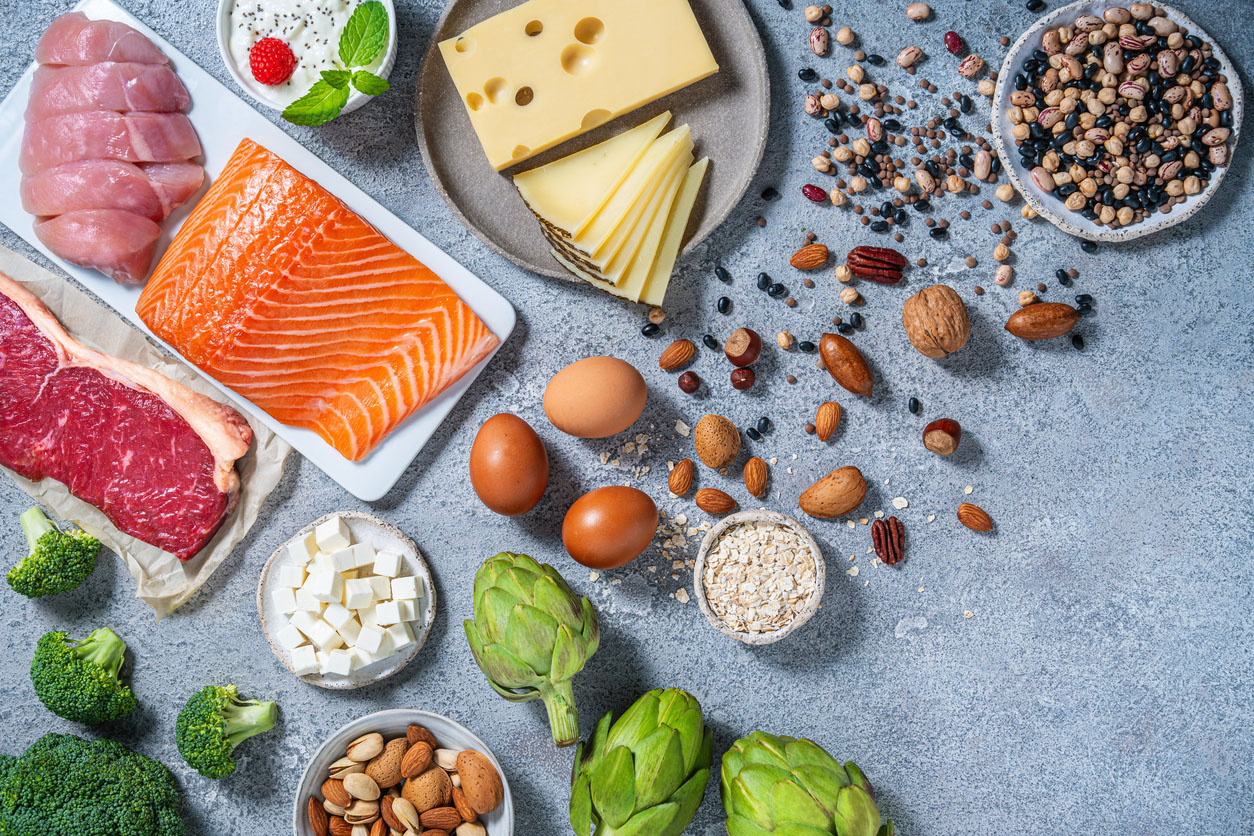
Therefore, people tend to eat until their protein requirements are met. If they’re consuming a low-protein food—say, breakfast cereal—they’ll eat until they harvest the meager protein it delivers, consuming in the process superfluous calories from starch and sugar. If, on the other hand, they were to eat a generous portion of salmon served on a bed of lettuce, they would notch their protein requirements with minimal additional calories from other macronutrients.
Protein’s leverage effect means the more of it you consume, the less room there’ll be for caloric fats and carbohydrates.
This is the basis for the superior satiety that protein-rich foods impart; cheap, ultra-processed foods that are the bane of Americans’ diets skimp on high-quality protein, but are high in palatability, encouraging over-consumption.
Not for everyone?
Missed in many press accounts is that the authors of this paper aren’t arguing that less protein is good for everyone; they mean the average sedentary American. They concede:
“ . . . some individuals may have a greater demand for protein. These include pregnant women, growing children, individuals who are eating a restricted number of calories [like millions of GLP-1 users], and individuals recovering from injuries, and restricting protein or specific amino acids could potentially be harmful for these groups. Many elderly individuals are protein deficient due to factors such as decreased appetite, financial constraints, and social isolation, and protein or amino acid restriction could move these individuals into a protein- or amino acid-insufficient state. Finally, those who are exercising may have higher protein needs or at least be able to consume higher levels of protein or specific amino acids without metabolic risk.”
Bottom line is that humans are extremely adaptable and can survive on a variety of diets—as long as they don’t consume junk or inordinate quantities of any calorie source. But for optimal performance, health span, freedom from most degenerative conditions and, potentially, even longevity, additional protein makes sense—especially when teamed with an active lifestyle that shunts that protein into crucial muscle reserve.
READ MORE in this comprehensive takedown, “The Protein Panic: How a Review Paper Became a Dietary Guideline in Three Days” by Dr. Robert Malone