Lately, in my spare time, I’ve been reading trash. No, not pulp fiction, but rather a book about trash: Waste Wars: The Wild Afterlife of Your Trash by Alexander Clapp.
I read it to answer a question that’s been nagging at me: Where does all the trash that I generate end up?
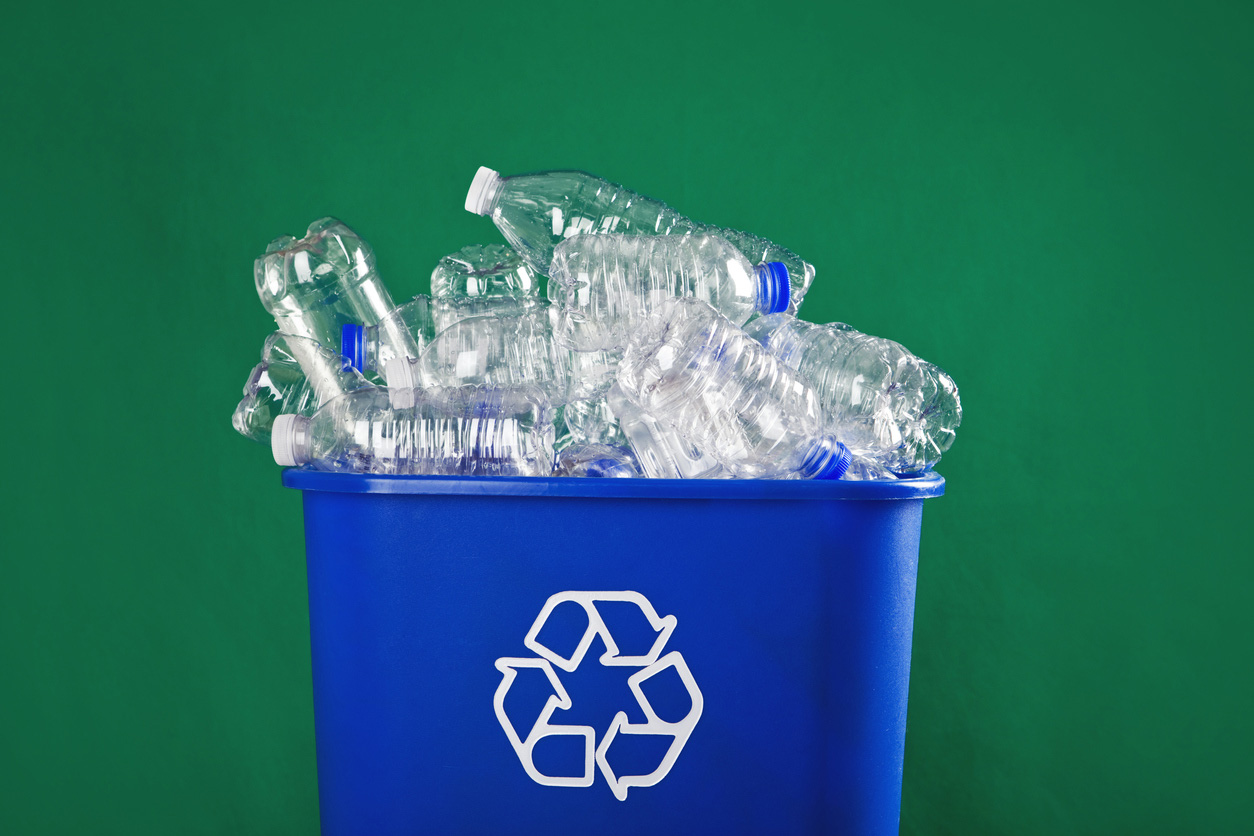
And it’s a lot. Not two or three days go by that, especially, my plastic, glass, and metal bin fills up with used containers, bottles, cans, and assorted wrapping. I virtuously empty them into designated color-coded receptacles in my apartment building, careful not to mix them with paper and cardboard, which goes into a separate container.
I scrupulously recycle, dividing my metal, plastic, paper, and compostables, chucking them into their designated bins. I even carefully wash containers of food remnants out of consideration for those who are tasked with sorting them.
I feel a pang of indignation at the idiots in my building who can’t seem to follow directions and just miscegenate paper with metal, or leave half-empty food containers for someone else to clean out at the recycling center.
When I’m at my country house, I even load all the trash into my car and drive to the local dump, er, “Recycling Center”. There, I encounter like-minded citizens busily performing their civic duty. I keep waiting to meet up with George Clooney, going incognito in a weathered trucker hat and Pendleton, but he hasn’t shown up yet.
And yet, I sometimes wonder: Is it worth the effort? Am I going through all that trouble, doing unpaid prep work on behalf of a sinister criminal organization, the garbage Mafia, that ultimately will just take all my carefully sorted trash and bury it indiscriminately in some illegal landfill?
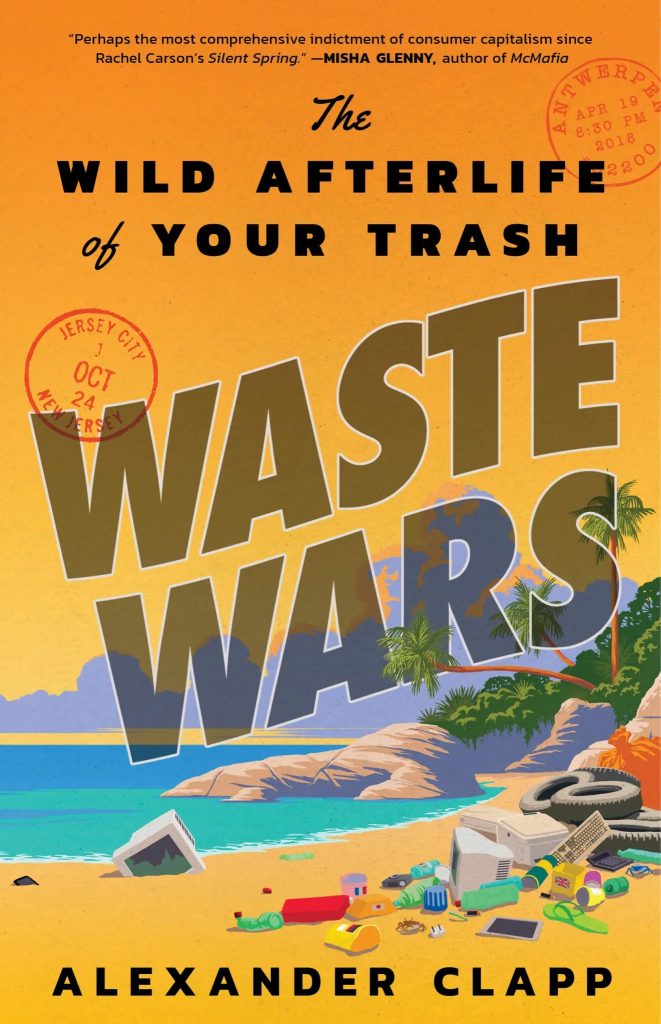
So, I read Waste Wars, and my worst fears were confirmed. The West’s way of disposing of innumerable tons of trash is a perfect example of NIMBY—“Not in my backyard”—or “Out of sight, out of mind”.
Alexander Clapp is an intrepid investigative journalist who undertook a multi-year tour of some of the most notorious waste disposal sites in the far reaches of poor countries of the Global South, where we offload our detritus. Many are secretive and downright dangerous for nosy Westerners to visit.
Of particular interest to me was Clapp’s description of the handling of plastic residue. Unlike electronic parts, ships, automobiles, and metal trash, which can be stripped down, salvaged for valuable constituents like raw copper, steel, and rare earths, plastic is forever.
Clapp provides background on how the plastic industry fostered a torrent of waste. Initially a novelty, designed to replace traditional bio-degradable materials like wood, ivory, natural rubber and glass, the first products began to appear during the inter-war period. Chemists innovated, and consumers marveled at the versatility, sturdiness, and low-cost of new materials like Bakelite.
World War II raw materials shortages catapulted versatile, light-weight plastic to ubiquity in aircraft, weapons, uniforms and household products. The post-war economic boom prompted a surge in plastic production. We became a society of stuff, our closets overflowing, our garages no longer with room for cars, everyone managing the overflow with remote storage units. The convenience of single-use, discardable containers and wrappings enchanted consumers—and enriched the burgeoning petrochemical industry.
Clapp reminds us that plastic is a petroleum byproduct. That means that, even if we were to drastically curtail our reliance on fossil fuels for energy, plastic production would take up the slack, becoming the fundamental driver of hydrocarbon extraction. We’re literally dredging up material stored deep within the earth for millions of years, rendering it immortal, and discarding it on the earth’s surface, where it will reside perpetually.
Plastic is also a repository of nasty heavy metals and chemicals like bisphenols, phthalates, brominated fire retardants, polyvinyl chloride, and PFAS compounds.
By the 1980s, it became apparent that plastic consumption, and its disposal, was way out of hand. Landfills in the developed countries were exceeding capacity, and plastic doesn’t biodegrade—it only breaks down mechanically over decades and centuries into progressively tinier particles (microplastics).
By now we recognize that these microplastics invade our soil, our water, wildlife, the fish and livestock we consume, and now, to a shocking degree, human organs, with incalculable effects.
The new wrinkle is that even our clothes are now plastic. Ever wonder why we have scant examples of Ancient Greek, Roman, or Viking clothing? Jewelry, amulets and armor remain, but leather, cotton, wool, silk, hemp and flax degrade with time. Remember the sensation over the introduction of nylon stockings in post-war years? Nylon takes hundreds of years to degrade. Fast-fashion has ushered in cheap, disposable clothing resistant to breakdown, discardable at the whim of consumers.
Challenged with a public relations problem, the petrochemical/plastics industry came up with a solution—recycling. The idea was that if citizens dutifully sorted their trash, it could receive a second life as a new product. That turned out to be a classic example of “green-washing”.
It has been famously said that, when New York demolished its Second Avenue “El” in the 1930s, it sold off the scrap metal to the Japanese, who refashioned it into the ships, planes and bombs that rained destruction on Pearl Harbor. But plastic is unlike pig iron which can be melted down and reforged into new implements.
Plastic is not homogeneous; there are thousands of different plastic ingredients that impart hardness, softness, flexibility, stretchiness, fire resistance, bounce, transparency or coloration, and other characteristics. Mixed plastic garbage—unless very purely sourced—can’t be readily melted down into a slurry which can be remodeled into new products.
Additionally, much plastic garbage is contaminated with food residues, metals, paper, glass. Cleaning and sorting are prohibitively costly, if not infeasible.
It turns out that the most optimistic prospect is for 20% of plastic trash to be eligible for recycling, and that only were it to be scalable and economically practical.
The solution: To package up all the plastic and mixed trash and ship it in cargo containers, in the millions of tons, thousands of miles to sprawling urban slums, or remote enclaves in deserts and jungles of the Global South. China readily accepted all that detritus until a few years ago, when it finally decided it had more than enough of its own trash and closed its borders to European, Japanese, and American garbage.
Now much of that plastic waste ends up in Central America, Indonesia, Thailand, and Africa. “Garbage imperialism” it’s been called. Corrupt local officials profit off the trash business, as once bucolic villages pile up with mounds of debris. Poor inhabitants, often children, relentlessly pick through the trash in search of accidentally discarded treasures.
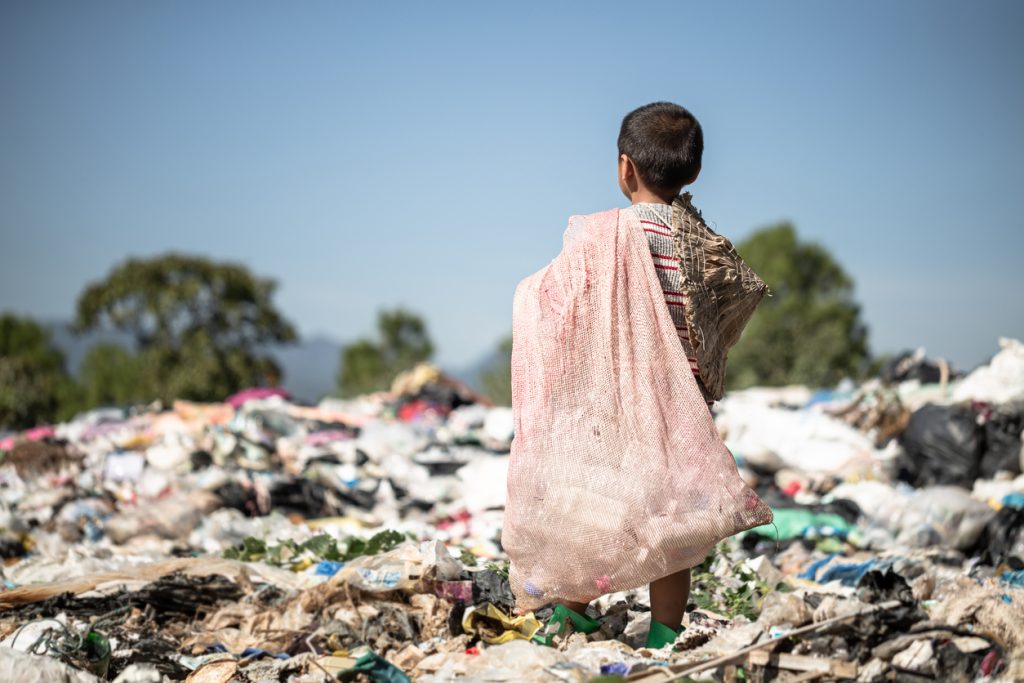
The plastic remnants are left to bake in the equatorial sun until rudimentary efforts are made to grind it down into pellets, which can be sold for reprocessing. But invariably, there’s too much plastic, most of which is unsuitable for recycling.
So it’s burned, in big pyres, or sometimes to fire up artisanal bakeries and makeshift tofu factories, where plumes of toxic smoke impregnate the food products. The chemical-laden ashes permeate soil, and flow into rivers, lakes and oceans.
Blood and urine tests of the inhabitants of these communities reveal soaring levels of contaminants, and rates of respiratory diseases, kidney and liver problems, and cancer that are unprecedented.
What can be done? Just dutifully recycling won’t cut it. Instead . . .
- Promote research on developing biodegradable alternatives to plastic. For example, Keurig-style K-cups can be made from natural materials; coffee drinkers can avoid imbibing hot microparticle-laced plastic, while landfills won’t be overwhelmed with spent cartridges.
- Prioritize traditional packaging materials like paper, glass, and aluminum (the latter, for example, requires only 5% of the energy when reconstituted as when originally manufactured).
- Reinforce international enforcement of bans on waste dumping in poor countries, with targeted foreign aid to wean locals from dependency on trash economy.
- Buy less unnecessary stuff! Shop your closets, mend your clothes, repair your appliances, and downsize your material possessions. Reinvigorate a thrifty, second-hand counterculture.
- Hasten development of innovative, scalable technological fixes to render plastic waste into harmless byproducts.
- Restrain plastic production with regulations on single-use packaging.
- Make producers financially liable for disposal of their waste.
We must also take steps to heighten public indignation over the waste problem; a good start would be via books like Waste Wars.
See also: “There’s too much plastic!”