What I learned this week about bones
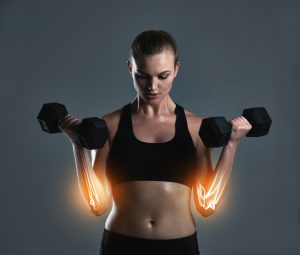
I’m a lifelong learner. Like a shark that has to continually propel itself forward for oxygen, I require the acquisition of knowledge to thrive. That’s why I signed up for a career in medicine, a profession that entails a commitment to lifetime learning. Sometimes it seems like drinking from a fire hose, but my brain demands it.
If you’re here reading this on Intelligent Medicine, it seems we have something in common.
This week I learned this about bone:
Bone loss not only can be slowed with exercise—it can be reversed! This insight came courtesy of one of our listeners, who inquired about an exercise program called Onero for osteoporosis. I had never heard of it.
So I invited Onero’s co-founder, Dr. Belinda Beck, for an informative podcast episode. Beck is a Professor in the School of Health Sciences & Social Work and member of the Menzies Health Institute Queensland at Griffith University in Australia where she has taught musculoskeletal anatomy and conducted bone research for over 20 years.
Professor Beck is the author of several groundbreaking research studies, including the LIFTMORE trial, which demonstrate the potential of a concerted program of specific exercises to enhance bone density and reduce fracture risk.
Any exercise is good, but . . .
First, some background. It’s well known that exercise has the potential to slow progression towards osteoporosis. One has only to recall what happens to astronauts after prolonged exposure to weightlessness: double-digit declines in bone mass. On earth, gravity takes care of things by stimulating mechanoreceptors in bones to signal proliferation of osteoblasts—bone building cells.
So we stay active by walking, running, cycling, swimming, and lifting weights to keep our bones strong. But studies show walking is often below the threshold to elicit significant bone renewal; protracted long distance running can even be catabolic when it comes to bone health.
Cycling and swimming are great for aerobic conditioning but are very low-impact. Weight lifters give their osseous mechanoreceptors more of a boost, but bone density outcomes vary depending on technique.
So Professor Beck sought to devise a specific exercise prescription that could optimize bone recovery in women with osteopenia, a precursor to high fracture risk.
Enter HiRIT
She discovered that resistance exercises that applied load to the spine and hips helped, but worked best when implemented as part of something called HiRIT—High intensity interval resistance training with impact.
You may have heard of HIIT—High intensity interval training—which involves short bursts of all-out aerobic exercise—ideal for boosting VO2 Max, a critical metric of cardiovascular fitness.
HiRIT is different. It focuses on strength, not endurance. In the Onero program, HiRIT teams impact exercises like jumping with resistance training to stimulate bone growth.
Don’t just try this at home! Especially if you have injuries or advanced osteoporosis. HiRIT requires expert supervision to customize personalized doses of exercise to maximize bone stimulation while avoiding injuries.
Is it arduous and time-consuming? Professor Beck and her associates boiled it down to just two 30-minute sessions per week for a period of 8 months in her landmark LIFTMORE study.
The HiRIT protocol focused on four core movements performed for 5 sets of 5 repetitions at high intensity (>85% of one-repetition maximum):
- Barbell Deadlifts
- Barbell Overhead Presses
- Jumping Chin-ups (or drop landings) with hard landings to provide axial impact loading
The results were astounding!
The HiRIT group significantly increased lumbar spine BMD by 2.9% (compared to a 1.2% loss in the control group) and femoral neck BMD by 0.3% (compared to a 1.9% loss in the control group. The latter doesn’t sound that impressive, but further analysis showed significant increases in femoral neck cortical thickness.
There were functional improvements, too: Participants showed major gains in height, dynamic balance, and functional reach.
A comparable follow-up study in men revealed similar improvements.
There are dividends beyond merely preventing fractures. We’ve long recognized that resistance exercise builds muscle, which is important for staving off sarcopenia, the age-related loss of lean mass that culminates in frailty. But there’s more. Muscles secrete myokines, signaling molecules that combat insulin resistance, tamp down inflammation, impact immunity, and even preserve brain function.
Bonus for overall health
Similarly, healthy bone generates osteokines, comparable messengers that exert anti-aging effects throughout the body. Hence, better bones, better overall health!
“Okay, so the obvious question is how loading a tibia could possibly affect the brain, liver, immune system, and metabolism. As we have discussed often, bone is not just a structural organ; it is also an endocrine organ. Bone cells release signaling molecules, sometimes called osteokines, that can enter circulation and influence tissues elsewhere in the body. The researchers found that mechanical loading changed this secretory environment, increasing several potentially protective signals while decreasing others associated with inflammation and aging.”
The exercise Rx
HiRIT is not billed as an alternative to drug therapy for osteoporosis; if undertaken preventively early enough it may preclude the need for antiresorptive meds altogether. Exercise can also be used to augment the benefits of drugs as part of an all-of-the-above approach, or while invoking the bone-preserving effects of hormone replacement therapy (HRT) for women.
Therefore, for women (and men) with suboptimal DEXA scores who are wary of taking osteoporosis drugs, an exercise program may not be an unreasonable alternative. After all, efficacy of drugs alone for universal fracture prevention has been challenged by some researchers. In a little-heeded review entitled “Reconsidering the Benefits of Osteoporosis Treatment: The Case of Bisphosphonates” investigators concluded:
“For patients at high risk of fracture, especially those with prior fractures, treatment with bisphosphonates is well supported by clinical evidence that may underestimate benefits; however, for patients with osteoporosis based on bone density alone, treatment benefits are less certain. Hip fracture risk reduction is modest and not supported in patients without a history of fracture . . . Clinical evidence is weaker for newer agents . . . Despite guideline recommendations and calls for more screening and treatment, there are legitimate reasons for some clinicians and patients to opt out.”
Since bone density tends to plummet in the first few years after menopause, HiRIT is probably best-suited for women during this critical midlife period to head off bone loss before it becomes too advanced.
I learned something—and now, hopefully, so did you!
See also: “The osteoporosis conveyor belt: From bone density screening to drugs” and “Rethinking osteoporosis”