Should we all be wearing fitness trackers?
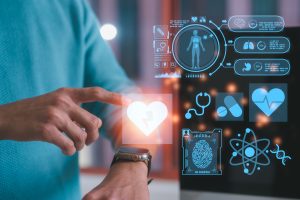
Fitness trackers and “wearables” are all the rage. Now HHS Secretary Robert F. Kennedy Jr. said he’d like to see everyAmerican wearing some sort of health or fitness device.
At a Congressional hearing last month, he declared:
“My vision is that every American is wearing a wearable within four years . . . Wearables put the power of health back in the hands of the American people.“
To reach that goal, RFK promised “the biggest campaign in American history to take control over their own health.”
He heralded that wearables have the potential to enable Americans to “see what food is doing to their glucose levels, their heart rates, a number of other metrics, as they eat it.”
A wide range of wearable options
The granddaddy of wearables is the “pedometer”, a device that registered walking steps, which popularized “10,000 steps per day” as a universal aspiration.
It turns out that’s not a magic number and peak fitness gains can be achieved by the majority of people with more modest exertion. Some studies have pegged 6,000-8,000/day as the “sweet spot”.
The main point is to incentivize progressively longer and more vigorous walks, and some leverage the step-counters to give them feedback. For example, I use my iPhone or Apple Watch on walks and runs to give me distance, and “splits”, telling me how far and fast I’ve gone. I strive to improve, or at the very least maintain my output. Advanced devices store performance and give you feedback: e.g. “This month you are exceeding last month’s average daily walking distance.”
Critics of trackers argue that striving for an arbitrary goal may heighten the likelihood of injuries or lead to an obsessive attitude towards exercise. These devices are best invoked to reinforce a personalized exercise prescription, not a one-size-fits-all goal.
Tick tock, tick tock . . .
One of the most useful features of modern wearables is their ability to capture heart beats. The Apple Watch, Garmin, etc. all faithfully detect your pulse via your wrist, with nearly the same accuracy as chest bands.
I use my watch to see if I’m pushing near my “red zone” upper limits of heart rate to approach my anaerobic threshold during a run, bike, or swim, or while recovering between weight stations. Alternatively, it keeps me honest when I’m “dogging it” during a subpar workout and need to step it up.
But formulas to determine your “maximal heart rate” are overly simplistic. The rule to subtract your age from 220 yields wildly disparate results depending on your age and fitness level. For example, it’d tell a 60-year-old that their MHR is 160—a level that would be unattainable or unsafe for many. Like me, many fit older athletes tell me that they rarely achieve a heart rate of 125, even when they’re totally gassed.
Because they record beat-to-beat intervals, heart rate monitors can yield, via a built-in algorithm, your heart rate variability (HRV), a much ballyhooed metric of autonomic nervous system fitness. HRV declines with age, illness, a bad night’s sleep, and can even forecast overtraining syndrome.
How awesome are you?
If you’re competitive, it’s fun to situate yourself on the age continuum for fitness. There are age bracket performance norms for HRV, and another useful derivative of certain wearables—VO2 max. The latter refers to your capacity to consume oxygen under conditions of maximal exertion. While VO2 max is best calculated in a physiology lab hooked up to a breathing mask, wearables can render a rough approximation.
Since resting pulse (the lower the better), time to baseline heart rate recovery from exercise (the faster the better), HRV (the higher the better) and VO2 max (the higher the better) can be monitored via wearables, you can get a pretty good fix on where you stand on the fitness bell curve. These metrics are consequential because all are reliable predictors of your risk of dying prematurely.
False alarms
Another derivative of heart rate monitoring wearables is the ability to detect—albeit at a rudimentary level—abnormalities of heart rhythm. This has led to apps that warn you of atrial fibrillation, which can hike the risk of stroke. Early detection can enable prompt prescribing of blood thinners or corrective therapy with electroshock, medication, or ablation.
While sometimes lifesaving, devices often deliver false positives. Doctors complain that they are besieged by users of smart watches whose wearers are needlessly worried over errant arrhythmia alerts.
Scoring your sleep
Because wearables like the Apple Watch and the popular Oura Ring and Whoop have motion sensors, they report on sleep duration and quality, and some can detect sleep apnea. But quantitating REM vs. non-REM sleep is only a rough approximation based on nocturnal movement, unlike measurements obtained in a sleep lab while hooked up to electrodes that measure eye movement and actual brain waves.
Sleep is where I draw the line on scoring my performance. Strivers like eccentric billionaire Bryan Johnson, who prides himself on having “the world’s best sleep scores”, seem to need reassurance that their nightly shuteye meets the grade. I consider the sleep zone an inviolable device-free refuge.
Keeping tabs on blood sugar
Time was that, to measure your glucose, you had to endure painful lancet sticks and bloody alcohol wipes to get a reading. And those measurements were only snapshots of fluctuating blood sugars over the course of a day.
Now, continuous glucose monitors—CGMs—have revolutionized blood sugar monitoring by enabling people to affix a set-and-forget disc to their upper arm. It renders continuous readings that can be graphed on smartphones, depicting peaks and valleys of glucose in response to various meals, exercise routines, variations in sleep quality or duration, illness, medications, and daily stresses.
This enables great “teachable moments” not just for diabetics, but also for the general populace striving for optimal health, since blood sugar is a signature of susceptibility to metabolic syndrome—perhaps the single biggest contributor to avoidable illness and premature death.
RFK Jr. has pledged to tackle price hurdles and coverage limits by working with device makers and insurers to make CGMs accessible to as many Americans as possible.
“I fell down and I can’t get up!”
A recent mishap of a family acquaintance illustrates the potential of wearables to safeguard seniors. She’s 90, but active and cognitively sharp, and lives alone and independently. While fiddling with her dog to get it into the car she fell backward on her shoulder.
In pain, and realizing she couldn’t get back up, she immediately received a message on her Apple Watch that a fall had been registered by its motion detectors and that 911 responders would be dispatched. She was actually able to talk to the 911 operator via her watch (her iPhone was in the car, but she couldn’t reach it) and they geo-located her to send an ambulance.
After an overnight stay at the hospital, she was sent home to nurse a broken shoulder with 24-hour care arranged.
Soon to arrive
Coming soon to the marketplace: Wrist applications for blood pressure and blood sugar. As with fingerstick glucoses, consumers can check their blood pressure at home, but isolated readings only offer a snapshot unreflective of daily fluctuations. Current continuous blood pressure monitors that rely on forearm determinations are obtrusive and cumbersome. While wrist BP monitors have long been marketed, they’re notoriously unreliable. But new technology promises to crack the code soon.
Apple is on track to offer glucose monitoring as a feature of new edition Apple Watches, based on revolutionary tech that non-invasively senses subtle colorimetric changes beneath the skin. Although anxiously awaited, that iteration is still said to be years away.
They’ve already developed trackers for respiratory rates and body temperature which can yield valuable clues on sickness, stress levels, and even menstrual cycles and fertility.
And speaking of “How’m I doing?”, very few people, unless they were to suffer from severe lung or heart disease, need bother to check their blood oxygen routinely. That is, until Covid came along, making plummeting blood oxygen scores the surest sign that sufferers determined to tough it out at home should consider heading to the ER.
In a remarkable instance of reverse progress, Apple was forced after a patent dispute to remove its blood oxygen app from new editions of the Apple Watch!
The future of wearables
Technological breakthroughs may soon enable wearables to track stress levels via measurement of cortisol or adrenaline, autonomic nervous system balance, perhaps even metrics like cholesterol, uric acid and hormone levels.
Smart wearables are being pioneered to determine optimal timing and duration of sunlight exposure, customized to skin types; others monitor hydration status (“Sodium and potassium estimation for custom hydration strategies”).
Smart clothing may provide feedback on posture and movement (your Apple Watch already pesters you to stand up at intervals to avoid prolonged sitting, newly recognized to be a risk factor for disease). Sensors may warn us of potential exposure to toxic levels of environmental pollutants, as they now advise us of high decibel noise.
There are even prototypes of “smart toilets” that deliver feedback based on urine and stool composition.
Sophisticated AI-powered algorithms may issue early warnings of impending disease. More integration will enable health practitioners to monitor the status of patients remotely.
Critics pan RFK’s wearable initiative
Predictably, foes have weighed in. They argue that privacy concerns loom, especially when the government, insurers, and employers seek access to the wealth of personal information garnered by devices. Already data breaches are a routine occurrence. Will insurance ratings hinge on compliance with draconian self-care edicts by lifestyle czars? Whatever happened to life, liberty, and the pursuit of laziness?
In a clean-up to his original pronouncement, Secretary Kennedy clarified that his intent wasn’t to promote a high-tech Big Brother regime:
“Of course I don’t want to mandate it. And the idea of everyone’s body being hooked up to a data center somewhere is horrifying. This data should be private, and when it is shared with the device provider it must be subject to health privacy laws.”
Still, it’s undeniable that the very people who most need more feedback on their health status—the sickest among us—are least likely to adopt new tech, whether by virtue of socioeconomic or health literacy barriers.
On the other hand, critics point to a surge in obsessive compulsive disorder, body dysmorphia, and general anxiety among heavy self-monitorers. Will wearables support people’s health self-empowerment, or supercharge their hypochondria? Will it all just become “TMI”?
Others fear that overzealous self-reliance will lead to rejection of formal medical oversight by qualified health professionals. They’re concerned that MAHA over-promises deliverance from disease via simplistic DIY lifestyle hacks.
Finally, some argue that government support for wearables may prove yet another costly boondoggle for taxpayers, with BigTech the real beneficiary (The global wearable device market surpassed $109 billion in 2024, with expectations of continued growth, potentially hitting US$249.33 billion by 2028).
Nevertheless, I’m cautiously optimistic that greater adoption of smart devices can deliver benefits if selectively deployed. It all boils down to this aphorism:
“Knowing yourself is true wisdom.” —Lao Zu