New Zealand’s Natural Bounty
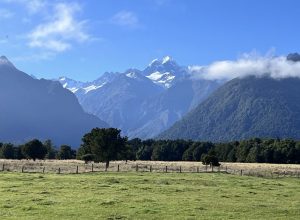
Since returning from a bicycle/hiking trip to New Zealand with Vermont Bike Travel, I’ve been sharing details of my adventure with followers of Intelligent Medicine.
Here, I want to talk about some of that extraordinary country’s natural bounties.
Water, water, everywhere . . .
First impressions: One of the things that struck me was the ubiquity of water. Indeed, the first time I turned on a faucet there, my pants were drenched with a powerful stream I hadn’t anticipated. At first, I thought that was a fluke, but no, everywhere—airport restrooms, hotel rooms, restaurants—the water pressure was relentless.
This in sharp contrast to my low-pressure faucets, toilets and showers here in New York, where water is at a premium. The showers in New Zealand were like fire hoses, and until I got the hang of it, I inundated my bathroom floor several times. I finally got used to throttling down faucets after several embarrassing episodes of wetting my pants with the splash.
The reason is that New Zealand is replete with water. On the west coast of the South Island where I toured, the average annual rainfall total is over 5 meters—more than 15 feet! Providentially, it barely rained during our entire ten-day trip, which would have made cycling rocky dirt paths a slippery ordeal.
The grass-fed edge
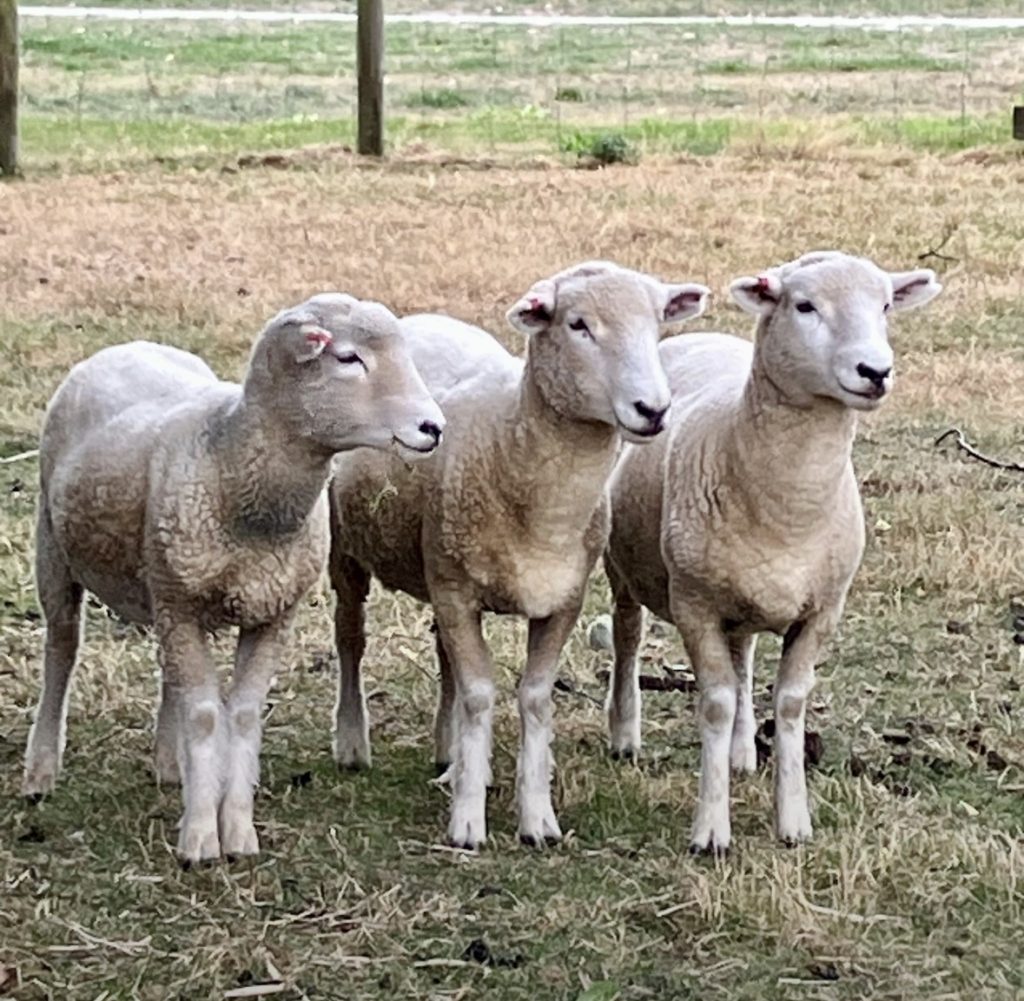
All that rain, coupled with rich volcanic soils, makes for great pasturage, and indeed New Zealand is renowned for its animal husbandry. They pride themselves on their grass-fed beef, lamb, venison, poultry, eggs, and dairy products. Sheep outnumber people (population around 5 million) by ten to one. That made for some outstanding meals of fresh lamb, venison, and steak.
While the U.S. mostly raises animals on CAFOs—huge industrial “concentrated animal feeding operations”—that fatten penned livestock with ultra-processed fodder, there’s only one small feedlot in all of New Zealand.
There’s a health advantage. I once coined the meme “It’s not just ‘you are what you eat’; rather, you are what what you eat eats!” By that I meant to acknowledge the fact that the nutritional composition of animal products is influenced by what they are fed.
Animals fed on corn or soy silage yield meat—or eggs and dairy—rich in pro-inflammatory Omega 6 fatty acids and bereft of beneficial Omega 3 fatty acids, as well as carotenoids derived from natural grass and vegetation. Confinement contributes to infections, for which antibiotics are administered (a rarity on New Zealand farms), and GMO feed—which has been banned in New Zealand—has unforeseen consequences for human health.
We visited a family-owned ranch there that raises sheep, cattle, and venison on 10,000 pristine acres. I was surprised when the rancher revealed his major export customer—Costco! Indeed, Costco offers high-end New Zealand grass-fed meat and dairy products to its customers.
Admittedly a cultivated taste, eels abound in New Zealand waterways, yielding unagi, a Japanese delicacy. They’re managed for sustainability and find their way to sushi emporia worldwide. Eels were once a staple of the traditional Māori diet.
We attracted a slithering mass of these six-foot-long creatures by throwing some chicken parts onto a riverbank.
New Zealand’s unique pharmacopoeia
Another unique New Zealand product is Manuka honey. Apiaries are ubiquitous in the countryside, and Manuka products line gift shop shelves. The science behind Manuka is robust. Where bees harvest the nectar of Manuka trees, it is enriched with the anti-bacterial compound, methylglyoxal (MGO). Manuka is graded according to its concentration of MGO; a few ounces of high-grade Manuka can sell for hundreds of dollars. Labels also display UMF™ (Unique Manuka Factor) ratings—“a comprehensive quality mark that measures MGO, DHA, and leptosperin to ensure authenticity”.
Manuka salves and ointments are great for diaper rash and have wound healing properties. The concentrated honey is handy to keep around for respiratory infections, and there’s emerging evidence—albeit less certain—for protective roles against cardiovascular disease and cancer.
Alongside Manuka on store shelves, one can find even more exotic offerings. Deer antler velvet—the fuzz that accompanies deer antler growth in spring—is a thing. It’s reputed to have aphrodisiac effects (“Honk if you’re horny!”), but the science around it remains murky.
Analysis reveals deer antler velvet is rich in IGF-1, a growth hormone, and other anti-inflammatory substances. Some believe it imparts an edge to athletes, and Chinese medicine prizes it as an anti-aging tonic. Quality velvet is also quite pricey; I couldn’t help noticing the many Chinese mainland tourists who thronged the counters where these products were sold.
Even sketchier were offerings of deer testicles and “pizzle”—deer penis. There’s not a lot of evidence these work to boost flagging libido, and in this age of Viagra and pharmaceutical testosterone replacement, I’m surprised by the durability of the appeal of these folk nostrums.
Remember the “green-lipped mussel” craze? It was once touted as an arthritis remedy, but in the U.S., it’s a little passé. Green-lipped mussels are native to New Zealand—you can order plates of them at restaurants. They’re also offered in supplements for joint health. They’re rich in anti-inflammatory EPA and other marine substances.
There are a few studies that substantiate small to moderate benefits of green-lipped mussels in osteoarthritis and rheumatoid arthritis, but research is limited to a few trials.
Why New Zealanders are “Kiwis”
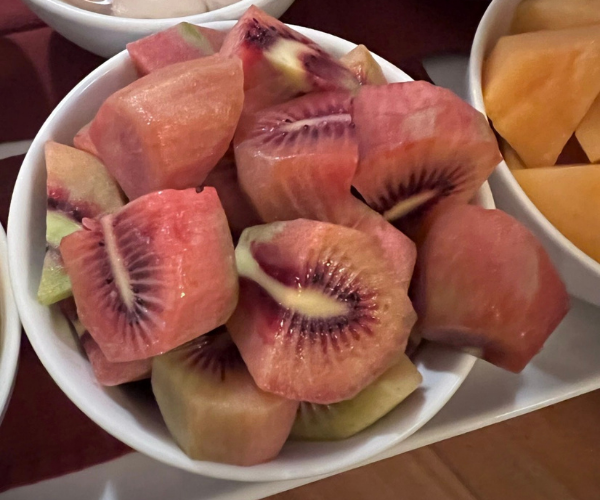
Of course, there are kiwis, the tasty oval fruit that’s now popular in the U.S. They have a long shelf life, so the exports we get here have traveled for a while. We’re used to the fuzzy brown ones that are green inside, but in New Zealand there are many varieties, including some that have bright red and orange flesh, and are incomparably fresher, more fragrant and delicious than what U.S. consumers are used to.
Kiwis are a functional food. They’re rich in vitamin C, potassium, antioxidants, and fiber, but their superpower resides in their ability to stimulate digestion and gently alleviate constipation.
Kiwi concentrates like Phloe®️ have proven a godsend to many of my long-suffering patients.
Contrary to popular belief, New Zealanders are called “Kiwis”, not after the fruit, but after a small flightless bird, the kiwi. Kiwis are endangered, nocturnal, and elusive; the only ones we saw were in dimly-lit enclosures where tourists can test their night vision trying to spot them.
Part of why kiwi birds are endangered is because of the introduction of invasive predators, like possums, that raid kiwi nests and steal eggs. A campaign to eradicate possums has been launched by the New Zealand conservation department. Like in the States, roadways are festooned with possum roadkill; we counted over 50 smushed possums on one winding drive along the south coast.
But one consolation of the possum proliferation is their fur; it’s extraordinarily soft. When blended with merino sheep wool, which some people find too scratchy, it yields a distinctive New Zealand hybrid clothing material, which is warm and fluffy.
I hope you’ve enjoyed these insights from my time in New Zealand. Head to my Facebook page for more photos from my travels.