Lessons I learned in Scandinavia and the Baltics
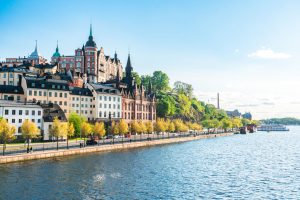
I recently returned from a trip to Scandinavia and the Baltics, encompassing eight countries: Norway, Sweden, Denmark, Germany, Poland, Lithuania, Latvia, and Estonia. The first part was via a Viking cruise, which we extended for a few more days in Riga, Latvia to explore family roots.
The unifying theme is that all these countries border the North Sea or the Baltic, centuries-old crossroads for maritime commerce. They were variously under Viking, German, Swedish, Danish, Polish-Lithuanian, or Russian rule. Hence lots of medieval and Renaissance history is reflected in the lovely architecture.
The food on board was excellent, and because we ate smorgasbord style with unlimited portions and offerings, it was hard to regulate intake. Who can resist scrumptious bread selections (I expended my entire year’s allotment of gluten in two weeks!), a vast pastry section, and an ice cream bar? It was my distinct impression that many of the guests were on the overweight side—this was not the Ozempic crowd.
I had apprehensions because I abandoned my customary dietary rigor to sample stuff I don’t ordinarily eat. But when I got home, I was pleasantly surprised that my weight hadn’t budged.
Maybe it was all the walking. There was not a day—except for one seaborne day—when we didn’t log over 10,000 steps—and sometimes 14 or 18 thousand. And this over steep cobblestoned streets that were booby-traps for feet, ankles, knees, hips, and backs. That, alternating with long bouts of sitting on plane flights and bus rides to attractions, rendered me stiff and sore in ways that I scarcely experience treading the smooth sidewalks of Manhattan.
Taking the plunge
I found the antidote in Nordic bathing. Because Viking is a Scandinavian-themed cruise line, they had an onboard spa with standard hot-tub, sauna and steam options, but also with a snow-filled cold room and an icy cold plunge.
The idea is to alternate hot/cold exposure to promote circulation and quell inflammation. In Oslo, little wooden barges line the waterfront that are sauna/bathing platforms. Bathing suit-clad men and women would emerge reddened from the heat and then dip into the frigid waters of the Oslo fjord, then head back inside to warm up again. Rinse and repeat.
One of our Norwegian guides, who revealed she was in her late 70s, seemed extraordinarily lean, peppy and spry. She attributed this in part to her daily plunges in cold water; even in winter, she staunchly maintains her routine by jumping into a hole cut in the ice.
I saw a variant of that in a pharmacy museum in Riga that depicted a 17th century aromatic steam sauna where bathers whipped themselves with birch branches—so-called “bristle thrashing”—sometimes referred to as sauna whisks or bath brooms—designed to invigorate the system. This treatment is still popular in the Baltic countries, Finland, and Russia.
The food
We visited a capacious indoor/outdoor market in Riga where all sorts of victuals were on display. Herring, smoked fish, and eel are popular, and in Norway they sell fancy salamis made of reindeer, elk, moose, venison—and even whale meat.
Scandinavian nutrition scientists tout the benefits of the “Nordic Diet”—a counterpoint to the vaunted Mediterranean Diet. By no means ultra low-fat or plant-based, it highlights fatty fish, meat, eggs, cheese, yogurt, as well as root vegetables and seasonal berries. Artisanal whole grain breads figure prominently. It emphasizes unadulterated, minimally processed foods.
Lavish breakfast buffets presented us with a wide selection of cold cuts, sausage, bacon, and and ham, cheeses, muesli, Danish pastry, fruit, and yogurts.
Traditional Nordic lunches consist of herring, smoked salmon, or pâté served open-faced on dark bread with cream cheese, garnished with onions and cucumbers, and lately—guacamole.
Swedish meatballs, rich meat or fish stews, or crispy fried pork—always with potatoes—were dinner staples. I couldn’t help noticing a smattering of KFCs and McDonald’s interspersed among the traditional cafes.
Only 16-18% of Scandinavian adults struggle with obesity, contrasting with other Western countries, particularly the U.S. where the rate is nearly 40%. The Danes are the net beneficiaries of the obesity trend, since the pharmaceutical giant Novo Nordisk, makers of Ozempic, contributes 10-12% of the Danish GDP.
Cod is a big part of the history of Scandinavia. As improved ship design enabled fisherman to tap more distant productive fishing grounds in the late Middle Ages, dried, salted cod became an important export commodity. This ultra-portable source of protein was responsible for a population surge throughout Europe—even in faraway Portugal, “bacalao” became a favorite local dish. Dried cod became a staple in the diets of the inhabitants of Catholic countries of Southern Europe on “meatless” Fridays and during Lent.
Boomtowns
Lately, it’s North Sea oil and tech that invigorate the economies of Baltic and Scandinavian countries. These once-backward and impoverished nations are experiencing a boom—especially in former Baltic Soviet Republics, Communist Poland, and East Germany, untethered from the Russian yoke in the 90s.
Healthcare is free, or nearly so with a small co-pay, in most of these countries. People like the system but complain of long wait times for elective procedures like knee or hip replacement. They pay nearly half their income in taxes, and in some countries, sales taxes are as high as 25%. Recently, Sweden has enacted reforms to free its economy from entitlement burdens and unleash more entrepreneurial spirits.
Nordic lifestyle
Quality of life is high in most of these countries; Denmark, for example, rates first among nations on the GNH scale—Gross National Happiness. It’s cold and dark for many months in those Northern latitudes. The Nordic lifestyle embraces year-round activity with winter sports like skiing, hockey, sledding and ice skating.
There’s also an active bicycle culture, especially in Oslo and Copenhagen, and everyone from little kids to seniors crowds the streets to commute to work or school. I managed to squeeze in a couple of guided bike tours, along the German Baltic coast and through the hilly terrain of Bergen, Norway.
In summer, many people take their small boats to modest summer cottages; most Scandinavians enjoy six weeks or more of government-mandated vacation time. Things reach a fever-pitch in mid-summer as people celebrate precious days and nights of nearly continuous sunlight.
Kids are encouraged to engage in sports, and in the Baltic countries it’s popular for school children to take traditional folk dancing electives to perpetuate their rich national heritage.
Amber power
Amber is a thing in the Baltic and Danzig, Poland especially boasting some amazing shops. I was surprised to learn of amber’s medical applications; fragments are dissolved in pure alcohol and left to stand for a few weeks to make a tincture for topical or internal use. There’s some scientific research that touts amber as a panacea for sundry degenerative and inflammatory conditions.
How nutrition made history
In Norway, I learned how nutrition helped the country’s national hero, explorer Roald Amundsen, win the race for the South Pole in 1911. Amundsen carefully studied the Greenland Inuit who for millennia surmounted the challenges of polar life. He stockpiled seal and penguin meat —rich in protein, fat and vitamin C (it turns out fresh, raw, or lightly cooked seal and penguin meat retains its vitamin C)—for his team and formulated calorie-rich pemmican rations. The demands of extreme cold and physical exertion required replacement of as many as five to six thousand calories per day during the nearly 2000-mile trek across the ice.
By contrast, Amundsen’s rival, British explorer Robert Scott, failed to take adequate precautions against scurvy and his team was soon exhausted and sick. Their conventional rations weren’t enough to stave off malnutrition, and they never made it back.
Providing the missing link in diabetes
Aboard the cruise ship, I befriended a fellow cycling enthusiast. In the hot tub, I told him I saw the telltale bruises of insulin injections on his belly and he said, “Good call—I’m diabetic.” Later at dinner I noticed that he liberally mixed starchy carbohydrates with his protein selections. I asked if he had ever been coached by his diabetes specialists about the benefits of a low-carb diet. He said no—“Every time I show up, there’s a new doctor and they seem happy with my numbers and just say ‘keep up the good work’.”
“Don’t they have nutritionists?” I asked. “I don’t recall ever seeing one, but my wife tries to serve me really healthy meals,” he countered. The saving grace was that at least he was an avid exerciser, which spared him diabetes complications, but his doctors whiffed on diet.
I couldn’t resist telling him that he might achieve even better blood sugar control with a low-carb regimen. “Really?” he replied, expressing surprise. A couple of days later he approached me beaming: “My glucose readings on my CGM are amazing—I’ve even had to cut back on my insulin!” It took a random meeting on a cruise ship to impart this simple, practical recommendation so fundamental to successful diabetes management.
All in all, an exciting and educational trip. Check out some of my photos and videos with descriptions on my Facebook page.